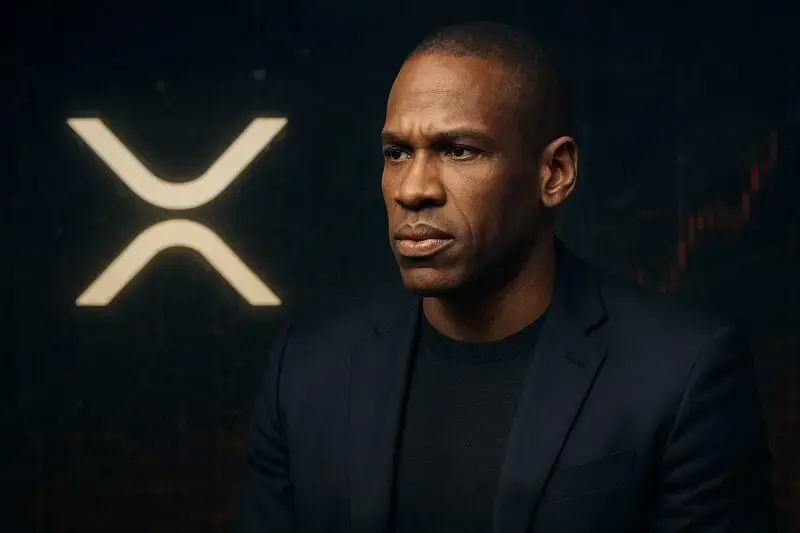

The XRP fate discussion has heated up considerably after BitMEX cofounder Arthur Hayes issued a pretty stark warning that most Layer 1 blockchains are actually heading to zero. In a recent appearance on “Altcoin Daily,” Hayes spared only Ethereum and also Solana from his grim prediction, and this has prompted some serious questions about where XRP stands in all of this. The XRP price outlook is now being scrutinized more closely, along with concerns about whether the asset can survive what Hayes describes as an impending Layer 1 blockchain collapse.
Also Read: EGRAG: XRP Structure Not Bearish, Bullish Roadmap Remains Active
XRP Fate Amid L1 Collapse Fears, Institutional Adoption and Market Risk
Hayes Delivers Blunt Assessment
Arthur Hayes didn’t pull any punches during his podcast discussion, and he made his position crystal clear. He stated:
“I think pretty much every other L1 besides Ethereum or Solana is a zero and they’re not going to do very well.”
His reasoning actually centers on where institutional money flows and which platforms institutions adopt. Hayes argued that large banks and organizations now realize that private blockchains don’t really offer the utility they hoped for, and that public chains provide essential security and meaningful usage. According to the BitMEX cofounder, Ethereum will serve as the backbone for traditional finance activity, with Layer 2 solutions such as Arbitrum and even Optimism addressing privacy concerns and scalability needs.
When interviewers asked Hayes to name his “magnificent five” for crypto, he listed Ethereum, Solana, Bitcoin, Zcash, and also Ethena. Hayes notably excluded XRP from this list, which continues his pattern of skepticism toward the asset. Hayes has previously hinted that Zcash could actually overtake XRP in market cap at some point down the line.
Banks Take Different Route With XRP
Right now, the XRP fate question becomes considerably more complex when you consider what’s been happening with institutional adoption trends. Over 200 financial institutions have actually joined RippleNet, and according to Aaron Slettehaugh, SVP of Product at Ripple, the platform is being designed with specific standards in mind. He stated:
“Ripple’s custody technology offers a single platform for safeguarding and managing digital assets, designed with the security and compliance standards that top global banks and financial institutions have come to rely on.”
Ripple Custody has been reporting a 250% year-over-year increase in new customers, and the service now caters to top-tier banks and financial institutions across Switzerland, Germany, France, the United Kingdom, and other major markets. The XRP Ledger is also building out capabilities to support tokenized real-world assets, stablecoins, and decentralized liquidity markets, positioning itself as a Layer 1 of choice for financial institutions that are operating in regulated environments.
Some banks like Santander, SBI Holdings, and others are using Ripple’s solutions for cross-border settlements and liquidity management, with several utilizing XRP as a bridge asset. The Layer 1 blockchain collapse warning that Hayes delivered has weight to it, but the XRP institutional adoption efforts suggest the asset might be following a different trajectory than what Hayes predicts.
Competing Visions Create Uncertainty
At the time of writing, the XRP price outlook may actually depend less on retail speculation and more on whether traditional banks embrace XRPL’s infrastructure at scale. Hayes’ experience in the industry makes his Layer 1 blockchain collapse prediction worth considering seriously, but the XRP institutional adoption narrative presents an alternative view.
The question that’s being asked by investors and analysts alike is whether XRP’s focus on regulated institutional use cases will be enough to ensure the XRP fate differs from the zero prediction Hayes made for most L1s. Hayes praised Solana for its meme-coin-driven strength, but XRP is taking a completely different approach by targeting traditional finance infrastructure needs.
Also Read: Ripple XRP News and Highlights You Missed This Week
The debate sparked by Hayes highlights some fundamental questions about which Layer 1 blockchains will actually survive long-term consolidation in the market. The Arthur Hayes XRP prediction—or lack thereof—has put a spotlight on competing visions for the future. Some see XRP’s path through institutional partnerships and regulatory clarity, while Hayes sees most L1s outside Ethereum and Solana heading toward irrelevance. Which vision proves accurate will likely become clearer as more banks make decisions about their blockchain infrastructure in the coming months and years.