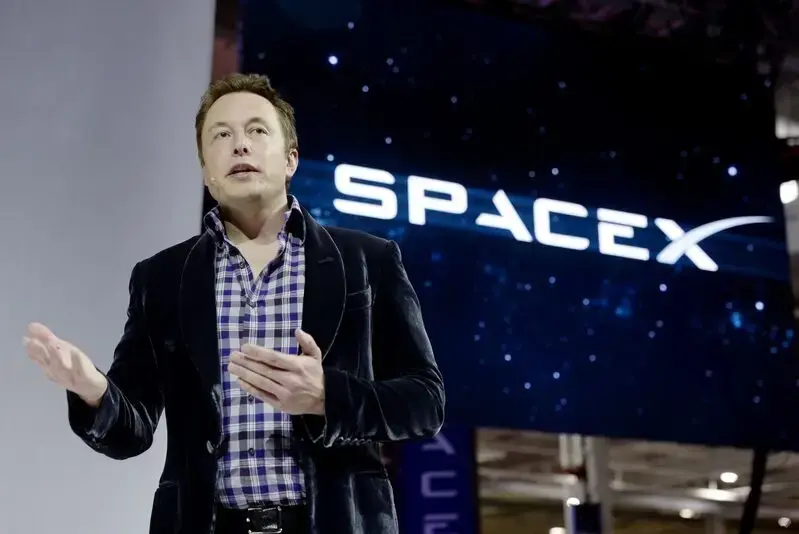

Elon Musk has unveiled its boldest vision yet, the one that prioritizes space colonization at its best. Musk, in his recent X tweet, has shared his intent of building a lunar city with the help of SpaceX. This city, as described by Musk, will be self-growing, adding more to the allure of this domain. If Musk’s plan to build a lunar city becomes successful, then there’s no stopping the SpaceX chief from becoming the first-ever trillionaire on earth. Here’s more on elements capable of bolstering Elon Musk’s net worth in the future.
Also Read: Investors Go All-In as BofA Bull & Bear Gauge Signals Extreme Optimism
Elon Musk’s Net Worth to Boost Again: Here’s How

Musk had earlier shared his intent of making SpaceX public next year, an idea that has already been receiving bullish reviews from the market. With the SpaceX and xAI acquisition, the investors are hoping for a full market revolution if SpaceX ever becomes public, with Elon Musk’s net worth rising at a rapid pace. In addition to this, Musk is spearheading independent AI-based projects as well, keeping SpaceX and xAI at the center of this change.
“My estimate is that within 2 to 3 years, the lowest cost way to generate AI compute will be in space. This cost-efficiency alone will enable innovative companies to forge ahead in training their AI models and processing data at unprecedented speeds and scales, accelerating breakthroughs in our understanding of physics and invention of technologies to benefit humanity.”
Musk’s Plans Have Pivoted From Mars to the Moon
In a new video, Musk can be seen stating how he plans to build a lunar city, with SpaceX attempting to build a self-developing city on the moon. Musk shared how his developmental plans for Mars have now been shifted to 2027, with a lunar landing focus taking priority for 2026. Musk later added that his lunar city plan can come to fruition in about ten years, which is much more scalable than Mars at present.
“For those unaware, SpaceX has already shifted focus to building a self-growing city on the Moon, as we can potentially achieve that in less than 10 years, whereas Mars would take 20+ years. The mission of SpaceX remains the same: extend consciousness and life as we know it to the stars. It is only possible to travel to Mars when the planets align every 26 months (six-month trip time), whereas we can launch to the Moon every 10 days (2-day trip time). This means we can iterate much faster to complete a moon city than a Mars city. That said, SpaceX will also strive to build a Mars city and begin doing so in about 5 to 7 years, but the overriding priority is securing the future of civilization, and the Moon is faster.”
Also Read: Dow Jones 50,000: Investors Turn to Smaller and Cheaper Stocks