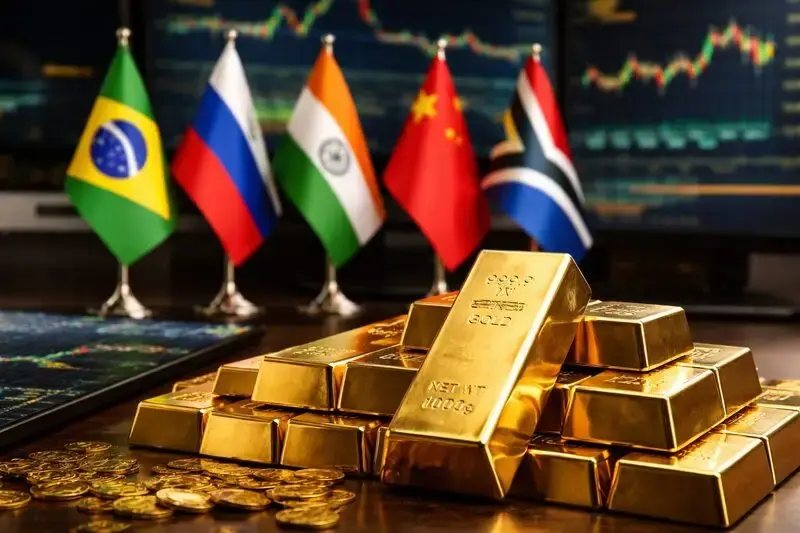

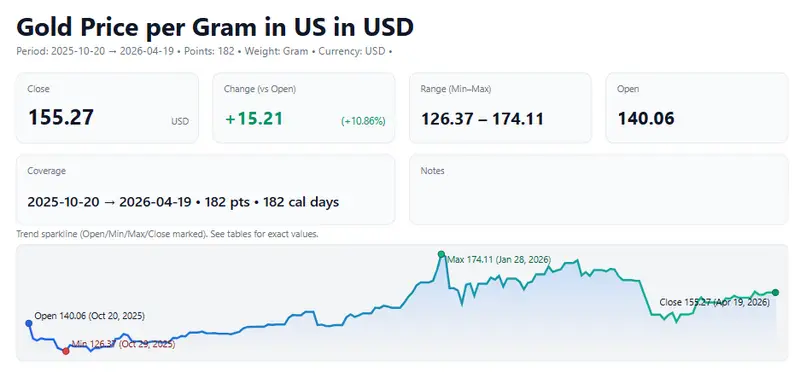
Gold is sitting near $4,850 per ounce right now, and BRICS buying gold is a big reason why. BRICS gold reserves have grown from 11.2% of global holdings in 2019 to 17.4% as of April 2026, per World Gold Council data — and the pace has only picked up. De-dollarization and gold accumulation are moving together, and the early stages of a BRICS gold-backed currency called the Unit are adding fuel to it. That’s also why BRICS countries are buying gold even faster now, despite prices hitting record highs.
Also Read: BRICS Proves Critics Wrong: 40% GDP While G7 Drops to 29%
Why BRICS Buying Gold and a Gold-Backed Currency Are Rising
The Scale of BRICS Gold Reserves
The numbers behind BRICS buying gold tell a clear story. Russia leads BRICS gold reserves with 2,336 tonnes, China holds 2,298 tonnes, and India also holds 880 tonnes. Brazil came back to the market in September 2025 for the first time since 2021, adding 16 tonnes to bring its total to 145.1 tonnes. Between 2020 and 2024, BRICS+ central banks made more than 50% of all sovereign gold purchases globally. The bloc added 663 tonnes in the first nine months of 2025 alone — worth around $91 billion at the time of writing. BRICS nations also produce roughly 50% of the world’s gold output, which gives them an edge no other bloc currently holds.
Source: GoldPriceZ
What the 2022 Sanctions Changed
BRICS buying gold at this scale nearly doubled in pace after 2022. The West froze approximately $300 billion of Russia’s foreign reserves almost overnight — Finance Minister Anton Siluanov confirmed the amount. No foreign authority could touch the gold Russia kept in domestic vaults, though. Central bank purchases jumped from roughly 500 tonnes a year before 2022 to over 1,000 tonnes annually in each of the three years that followed. Every finance minister watching drew the same conclusion: reserves you cannot access are also not really reserves.
The Unit, the Data, and Where This Goes
BRICS buying gold is also about building new infrastructure. On October 31, 2025, the International Research Institute for Advanced Systems launched a pilot of the Unit — a digital trade instrument carrying 40% physical gold and 60% BRICS national currencies, with each unit also set at one gram of gold. The BRICS gold-backed currency targets wholesale trade settlement between member nations and also falls outside the cryptocurrency category altogether. BRICS buying gold and the Unit pilot together form the outline of a parallel financial architecture, one where de-dollarization and gold strategy move in the same direction.
Frank Giustra, Canadian mining financier, stated at the Precious Metals Summit in Beaver Creek:
“We’re now, believe it or not, in the era of hard money. If you own paper gold, you do not own gold. When the crunch comes, it will not be there.”
The World Gold Council noted, in its 2025 Central Bank Gold Reserves Survey:
“Gold’s performance during times of crisis, portfolio diversification and inflation hedging are some key themes driving plans to accumulate more gold over the coming year.”
73% of central bankers globally now expect the dollar’s reserve share to fall further over the next five years, and a record 43% plan to increase their holdings. None plan to reduce them. The dollar holds around 57% of global reserves at the time of writing — down from 71% in 1999.
Also Read: BRICS U-Turn: Russia Interested in Resuming Investment Options with US
BRICS buying gold continues to reshape that picture, gold reserves keep climbing, and the BRICS gold-backed currency pilot adds another layer to what is also, clearly, not a temporary trend. Buying gold remains one of the most consequential structural shifts in global reserve management right now.