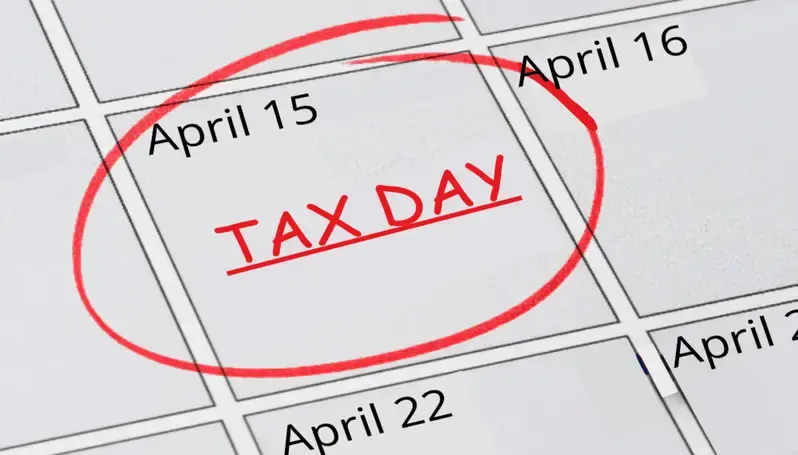

When are taxes due in 2026? April 15 — and that is today. The 2026 tax deadline for most Americans lands on April 15, which also settles when is the last day to file taxes without late penalties piling up. Can I file taxes on April 15? Yes — online submissions go through until midnight in your time zone. Not ready? You can still request a tax extension today and push the paperwork deadline to October 15, though that IRS extension does not move your payment due date. What happens if you file taxes late without doing anything at all? The IRS starts charging penalties the moment the deadline passes.
Also Read: Crypto Tax-Free Countries: Best Crypto Tax Havens in Europe
Tax Deadline 2026, Filing Extension Rules And Late Tax Risks
How to File a Tax Extension Today
When are taxes due 2026 for someone still hunting down missing forms? You can push the filing deadline to October 15, but you need to submit the request today. Three options exist right now:
- Pay at IRS.gov and mark the payment as an “extension.” The IRS logs it automatically — no separate form needed, and you get a confirmation number for your records.
- File Form 4868 electronically through IRS Free File — free at every income level, no questions asked.
- Mail Form 4868 with an April 15 postmark. Head to a USPS retail location for a hand-stamped postmark if you’re cutting it close — they do it at no charge.
When are taxes due 2026 on the payment side? Today, same as always — filing a tax extension only delays the return, not the bill. The IRS has said this clearly: an IRS extension buys time to file, not time to pay.
Carl Breedlove, principal tax research analyst at H&R Block, stated:
“Taxes are still owed by April 15.”
A lot of people request a tax extension specifically because paperwork has not arrived yet — K-1 forms from partnerships and trusts tend to run particularly late.
Yishai Kabaker, partner at Gursey Schneider LLP:
“If you are missing information, you definitely want to file an extension to give you more time to gather that information. K-1s from third parties are some of the most common causes of missing information.”
What Happens If You File Taxes Late — The IRS Penalties Breakdown
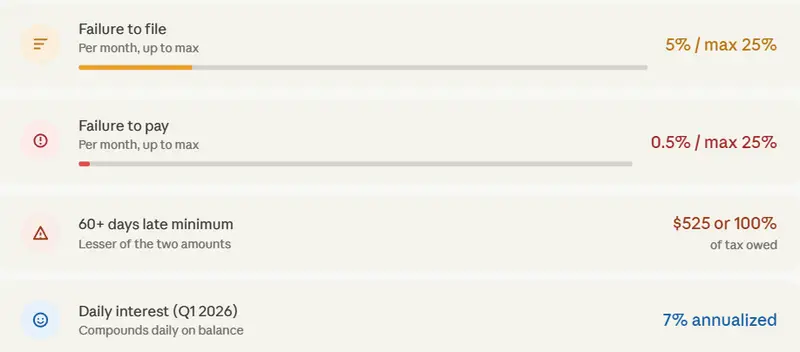
When are taxes due 2026, and what does missing the deadline actually cost? The IRS charges a failure-to-file penalty of 5% of the unpaid tax per month, up to a maximum of 25%. On top of that, a failure-to-pay penalty of 0.5% per month runs separately on any balance you still owe. Returns more than 60 days late also face a minimum penalty of $525 or 100% of the tax owed — whichever is smaller. Interest compounds daily on top of all of it.
When is the last day to file taxes before all of this starts? Today. An approved IRS extension takes care of the failure-to-file penalty — but it does nothing to stop interest from running on what you owe after April 15.
Can’t Pay the Full Amount? Here’s What to Do Right Now
So when are taxes due 2026 if you simply do not have the full amount? The payment deadline remains anchored at April 15 regardless. The IRS also lets you apply for a payment plan online at IRS.gov right now — and most people also get a response almost immediately after they apply. Can I file taxes on April 15 and also set up a payment plan at the same time? Filers can execute both today.
Mike Faulkender, former IRS commissioner and co-chair of American Prosperity at the America First Policy Institute, stated:
“Remember that even if you claim an extension, the money is owed on April 15. You have to actually send in a check or have the payment deducted from your account by the filing deadline.”
And what happens if you file taxes late even with an IRS extension already in place, right now? The filing extension eliminates the late-filing penalty, though interest continues to accelerate across any unpaid balance from today onward. With taxes due in 2026 right now, paying even a partial amount today also cuts down on what interest and penalties add up to — and that difference also grows every day you wait.