

According to data from Token Terminal, Solana’s stablecoin market cap has hit a new all-time high of $15 billion. Stablecoin supply on the SOL network has surged by a whopping 200% over the last year (YoY). Stablecoins have become a cornerstone of the crypto industry over the last few years. Let’s discuss what’s pushing stablecoin adoption.
What’s Pushing Solana’s Stablecoin Supply To New All-Time Highs?

Solana’s recent surge in stablecoin supply comes amid a larger surge in stablecoin adoption. According to Token Terminal, stablecoin holders are at an all-time high, breaching the 200 million mark.
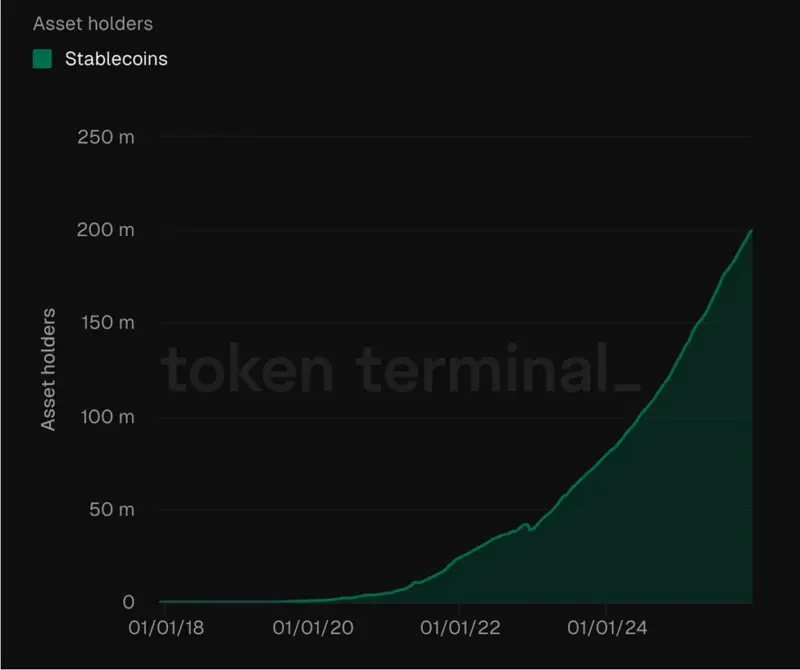
Stablecoin adoption may have surged due to the Trump administrations’ pro-crypto stance. The US passed the GENIUS Act (Guiding and Establishing National Innovation for U.S. Stablecoins) last year, bringing more clarity to the industry. The GENIUS Act has likely led to a surge in investor sentiment around stablecoins.
The rise in stablecoin holders may have been further propelled due to the bear market, leading to investors liquidating their crypto holdings, opting for stablecoins until the bull market returns. The crypto market faced a steep price correction in October 2025. Investors may have moved their funds from coins such as Bitcoin (BTC), Ethereum (ETH), XRP, etc., to stablecoins such as USDT, USDC, RLUSD, etc. Stablecoins maintain the value of the coin in a 1:1 ratio with the US dollar. Moreover, the GENIUS Act made it compulsory for issuers to be fully backed.
Also Read: Crypto Market Prediction: Month-by-Month Analysis of the 2026 Bull Run
The adoption for stablecoins is expected to continue surging over the coming years. However, Bank of America CEP Brian Moynihan has expressed some worry around the trend. Moynihan believes that interest-bearing stablecoins could drain $6 trillion from bank deposits. The move could lead to increased borrowing costs for small businesses that rely on traditional bank lending.