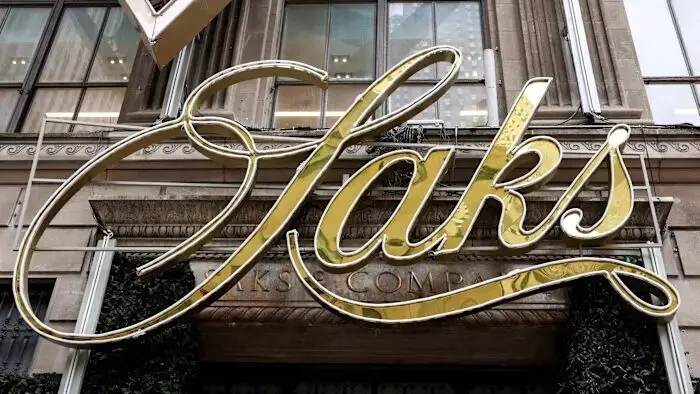
Saks Global filed for bankruptcy late Tuesday, marking a pretty significant moment for luxury retail in the United States, as the parent company of Saks Fifth Avenue officially entered Chapter 11 protection through the US Bankruptcy Court for the Southern District of Texas. This actually represents the first major retail collapse of 2026, and it comes just over a year after the company completed its $2.65 billion acquisition of Neiman Marcus, a deal that was heavily financed with debt and has been weighing down the business ever since
Also Read: Amazon (AMZN): Next Magnificent 7 Stock to Hit $4 Market Cap?
The company submitted the filing to the bankruptcy court as American shopping habits continue to shift in ways that fundamentally challenge traditional department store models. Right now, many consumers have grown increasingly frustrated with luxury retailers, along with citing higher prices for what they see as lower quality merchandise. Consumers who still purchase high-end goods increasingly bypass department stores altogether, buying directly from luxury brands themselves in what has become a clear trend toward direct-to-consumer strategies.
Luxury Retail Faces Debt Pressure And Shifting Consumer Demand
Leadership Changes Signal Deeper Crisis
Some pretty significant turmoil at the management level actually preceded the Saks Global bankruptcy. Marc Metrick stepped down as CEO back in early January, and Richard Baker, who was the executive chairman at Saks Global, took over the role. Less than two weeks later though, Baker also departed from the CEO position. As part of the bankruptcy filing, the company appointed former Neiman Marcus chief Geoffroy van Raemdonck to lead the company through its restructuring efforts.
Van Raemdonck stated:
“This is a defining moment for Saks Global, and the path ahead presents a meaningful opportunity to strengthen the foundation of our business and position it for the future. In close partnership with these newly appointed leaders and our colleagues across the organization, we will navigate this process together with a continued focus on serving our customers and luxury brands. I look forward to serving as CEO and continuing to transform the Company so that Saks Global continues to play a central role in shaping the future of luxury retail.”
Americans Blame the White House for Harming the Economy
The Saks Fifth Avenue bankruptcy comes at a time when economic uncertainty has been dampening consumer confidence across the board. A slowing job market has really amplified anxiety among shoppers, and consumer sentiment has remained pretty weak. Actually, a recent CNN poll found that a majority of Americans blame the White House for harming the economy, with inflation holding steady at 2.7% in December. These economic pressures have been felt throughout the retail sector, but legacy department stores have struggled particularly hard to adapt to the changing landscape.
The Neiman Marcus acquisition debt proved to be quite a significant burden for the company. Reports indicate that Saks Global struggled to pay vendors in the months leading up to the filing, and these strained relationships fueled speculation about a possible bankruptcy well before the official announcement was made. Some vendors even stopped shipping merchandise to the retailer, which made it even harder to maintain inventory levels and drive sales.
Financial Restructuring And Industry Concerns
Glenn McMahon, who is the managing partner at MAC Advisory and Consulting, actually saw the Saks Fifth Avenue bankruptcy as somewhat inevitable. He stated:
“I’m in the camp that bankruptcy is inevitable, and I think it’s a desired outcome — they could close non-performing locations well in advance of the lease expiring.”
His perspective reflects a view shared by some industry observers that restructuring could provide opportunities to streamline operations and close underperforming locations, particularly in cases where Neiman Marcus and Saks Fifth Avenue stores are in close proximity to each other.
Also Read: BRICS De-Dollarization in 2026: Turning Point for Global Dollar Use
Financial data painted a concerning picture even before the Saks Global bankruptcy filing. Ragini Bhalla, head of brand and spokesperson for Creditsafe, shared data on the company’s payment patterns that revealed persistent cash flow problems. She stated:
“Saks Inc.’s Days Beyond Terms (DBT) data over the past twelve months reveals a persistent and troubling pattern of late payments that point to sustained cash flow distress. DBT measures how many days late a company pays its bills. Throughout the entire year, Saks’ DBT has hovered well above the industry average of 10-12 days, ranging from a low of 27 in November 2024 to a high of 41 in January 2025 and March 2025.”
To facilitate the restructuring process, Saks Global has secured $1 billion in debtor-in-possession financing, which will provide liquidity to fund operations and turnaround initiatives during the bankruptcy proceedings. This financing is actually pretty important for keeping stores open and maintaining some level of normal operations. A bondholder group has also agreed to provide an additional $500 million in financing once the company emerges from the Saks Global bankruptcy protection.