
XRP banks adoption has been at the center of the crypto conversation for a while now, and right now, the picture is more complicated than many in the community want to admit. Banks still face real obstacles, and the regulatory uncertainty around crypto, including XRP specifically, is a big part of why. Despite Ripple’s legal wins against the SEC, broader XRP banks adoption stays limited, and Ripple’s own CEO has said as much. The Ripple XRP clarity gap between what court rulings have settled and what financial institutions actually need is still very much there, at the time of writing.
Also Read: Something Unusual Is Happening With XRP Despite Price Crash
XRP Banks Adoption: Crypto Regulatory Uncertainty And Clarity Gap

What The Data Actually Shows
Crypto content creator Crypto Sensei revisited the issue recently, sharing a video built around comments from Ripple CEO Brad Garlinghouse. The argument made was also the inconvenient one: the XRP community’s claim that full regulatory clarity has already been achieved doesn’t really hold up when you look at what Garlinghouse himself has to say about it.
Crypto Sensei reviewed Ripple’s announcements over the past year and a half, looked at XRP-related metrics, and went back through the court decisions that were supposed to settle things. The data didn’t show the kind of surge many expected. His conclusion was that XRP regulatory uncertainty hasn’t been resolved enough for banks to feel confident moving forward, and that greater clarity is still needed before real, widespread XRP institutional adoption can happen.
What Garlinghouse Actually Said About Banks And XRP
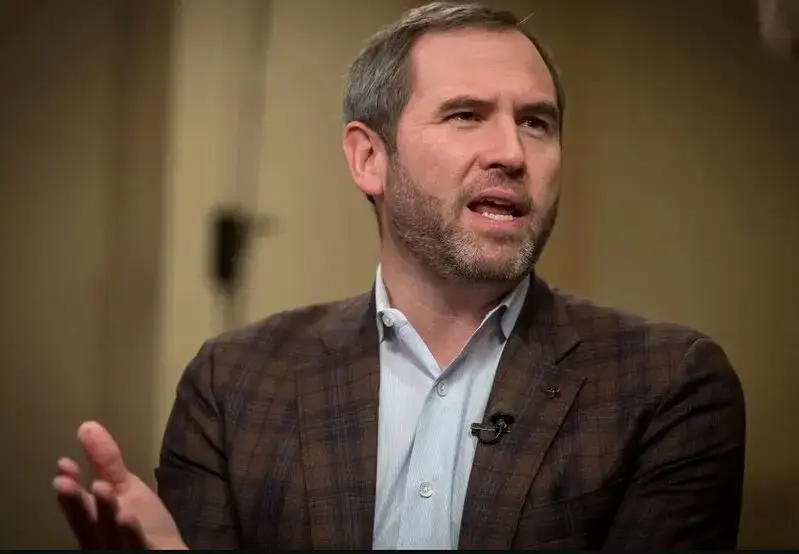
Garlinghouse has been pretty direct on this point. Speaking on Fox Business, he explained what the CLARITY Act would actually change and why it matters for banks. He drew a clear line between the legal clarity XRP gained from the SEC case and the broader federal clarity the whole industry still needs.
Garlinghouse stated:
“That’s clarity for XRP, but I think for the industry to really move forward in the United States, you need something like the Clarity Act to make it clear about other digital assets as not being securities.”
He also argued that legislative progress would remove the single biggest blocker for banks. Garlinghouse said that legal clarity would break down the wall of fear that prevents large banks, particularly in the US, from entering the sector. When asked what passing legislation would actually unlock, he was just as clear:
“It unlocks banks in the United States and around the world to lean into this industry. If we get it codified into law, more financial institutions in the United States and globally will be leaning in.”
Where XRP Banks Adoption Actually Stands Right Now
That is a pretty telling statement from the man running Ripple. Crypto regulatory uncertainty around XRP is not just a talking point. Compliance teams inside major financial institutions need federal rules, not just legal precedent, before they sign off on integrating a digital asset into payment operations. XRP banks adoption at scale requires exactly that kind of certainty.
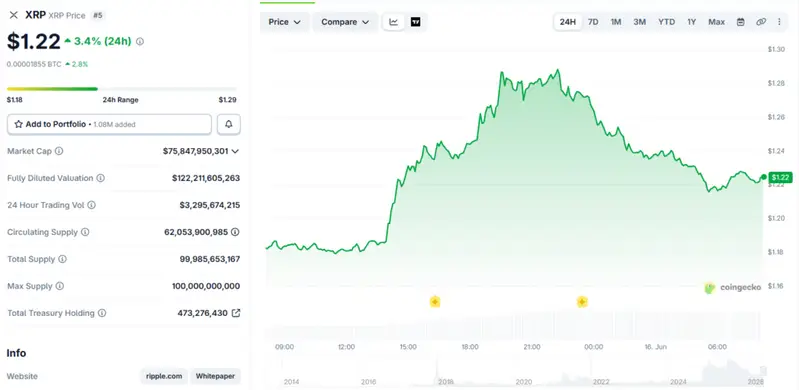
At the time of writing, XRP trades at $1.22, up 3.4% in the last 24 hours, with a 24-hour range between $1.18 and $1.29. The market cap sits at $75.84 billion, and the 24-hour trading volume is around $3.29 billion, with a circulating supply of just over 62 billion tokens.
Ripple Prime, the company’s brokerage arm, has tripled its revenue run rate, and Garlinghouse described 2026 as a record year for corporate demand. The business is clearly growing. But XRP institutional adoption at a banking level, the kind that sees financial institutions routinely using XRP for cross-border settlements, is a different thing. The Ripple XRP clarity gap is still sitting between where things are and where they need to be, and XRP banks adoption moving to a new level depends on what happens in Washington, not on the charts.