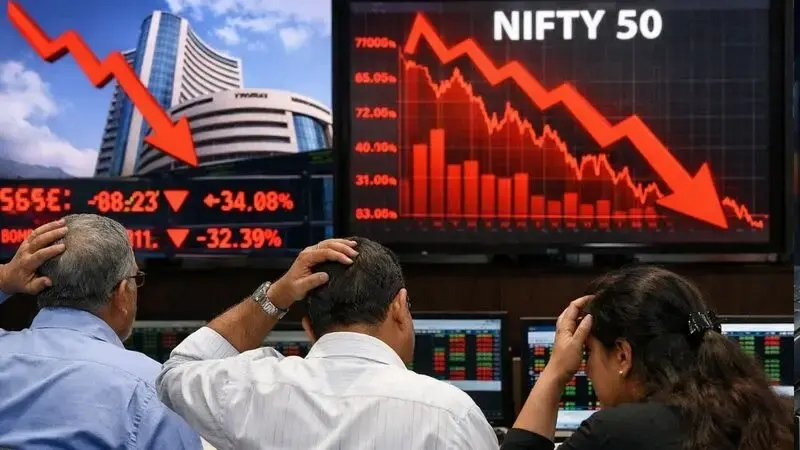

Panic is gripping the stock market in India as Sensex plunged more than 5,000 points in three trading sessions. After the Israel-Iran-US conflict broke out, the index has plummeted nearly 5% in value. It went from 82,700 to a low of 78,500, erasing all the gains it generated this year.
The Nifty 50 index also erased 1,200 points, shedding nearly 8% of its value in three trading sessions. It dipped to 24,300 from 25,300, and both India’s stock market indexes are in bearish grips. There are fears of a severe downturn as the conflict is only escalating. Trump vowed “whatever it takes,” announcing that the war could extend four to six weeks.

India’s stock market crash would likely continue throughout the week. Sensex has lost close to 8% in value year-to-date, while Nifty has erased nearly 7% YTD. Anyone who took an entry position through mutual funds in the indexes is underwater. A quick recovery from here is questionable as the sell-off is likely to continue.
In addition, collateral damage is being felt across the UAE, Bahrain, Saudi Arabia, and Qatar. While the UAE was destined to be the safest country in the region with financial stability, the war is challenging that notion. India’s stock market crash has sent leading equities to new lows as the slump extends this week.
Also Read: South Korea Stocks Plunge in Biggest Crash Since 2008
Stock Market Crash in India: A Buying Opportunity in Disguise?

The stock market crash in India could be a buying opportunity, as the slump occurred not due to weak fundamentals, but due to a conflict. The escalation has stopped trade functioning at the Strait of Hormuz, and also made oil prices surge to $78. Taking an entry position during the crash offers better results when the conflict cools down.
While India’s stock market is gearing up for the Sensex to reach 100,000, accumulation below the 80,000 range is beneficial. Buying now and holding on for the next five to 10 years will be rewarding. The fundamentals remain strong, and this can be an opportunity to make more money.