
Micron DDR4 output is set to quadruple at the company’s Manassas, Virginia facility, and that has a fair number of investors asking whether the current DDR4 supply shortage is about to lose steam. On May 22, Micron commenced 1α DRAM production at the site, the first time its most advanced DDR4-compatible process has run on U.S. soil. The timing is also a bit ironic: Micron had previously been winding DDR4 down, citing end-of-lifecycle plans, but reversed course once the chip became unexpectedly profitable. Same-spec DDR4 die prices are running roughly 40% higher than DDR5 equivalents right now, according to Nanya Technology. Whether the Micron DDR4 output surge triggers a MU stock price crash, or simply fills a genuine gap, is the question investors are sitting with.
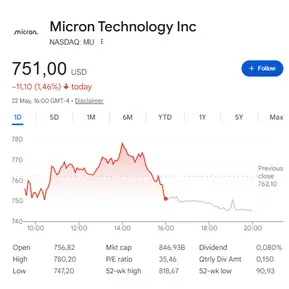
Source: Yahoo Finance
Micron DDR4 Output, HBM4 Demand and MU Stock Forecast Risks
What The Manassas Expansion Actually Means
Micron invested more than $2 billion to expand and modernize the Manassas plant, which also received $275 million in CHIPS Act funding. The 1α node, the company’s fourth-generation 10nm-class process, increases bit output per wafer and lowers production costs at the Virginia site. Qualified volume production of DDR4 and LPDDR4 is expected by end of calendar 2026. The facility serves long-lifecycle specialty markets: automotive, defense, aerospace, industrial, and medical equipment, sectors where a single qualified part stays in production for many years and where the DDR4 supply shortage has been particularly acute.
S&P Global Mobility estimated automotive DRAM contract prices could rise between 70% and 100% in 2026 versus 2025 levels. Inventory buffers for automotive and industrial DDR4 buyers reportedly fell from more than 31 weeks to roughly six to eight weeks at the time of writing.
Sanjay Mehrotra, Micron Chairman, President and CEO, stated:
“By bringing advanced 1α DRAM manufacturing to the U.S., we are strengthening domestic supply for our U.S. customers and global markets. Today’s milestone marks a critical step in Micron’s $200 billion investment plan to expand memory manufacturing and R&D capabilities in the United States.”
Mehrotra also had this to say on the longer-term U.S. production share:
“This will bring Micron’s total production over the course of the next ten years, as we ramp up all these multiple fabs, to about 40% of our production. By comparison, it is about 10% today.
Is A MU Stock Price Crash Actually Likely?
The concern follows the classic memory cycle: DDR4 supply shortage pushes prices up, high margins pull in new capacity, new supply floods in, and prices correct. Financial commentator Di Xiang, who flagged the Micron DDR4 output expansion on social media, cautioned that following news of this capacity move, investors may “shift focus to other segments of the AI supply chain,” with foundry stocks also worth monitoring. Some market participants argue stock prices tend to reflect future expectations well before actual wafers ship, so the MU stock price forecast could face pressure even before output ramps.
The bull case also carries weight. The Manassas facility feeds long-lifecycle specialty markets, not the Asian commodity DRAM spot market. New capacity also takes time, and qualified production is not expected until late 2026. The broader MU stock forecast stays heavily bullish, with 18 buy ratings and zero sells among tracked Wall Street analysts, and a median price target of $542.50 across 28 analysts.
HBM4 Memory Demand Is The Bigger Picture
On the HBM4 memory demand front, Manish Bhatia, Micron’s Executive Vice President of Global Operations, stated at the JPMorgan investor conference:
“Micron’s HBM4 ramp-up speed is actually twice as fast as last year’s HBM3 12-layer product. Yield improvements are also accelerating.”
HBM4 memory demand tied to AI infrastructure, and specifically Micron’s integration into NVIDIA’s Vera Rubin platform, is what most analysts say will determine whether the Micron DDR4 output surge stays a sideshow or becomes a real MU stock price crash risk. Micron also locked up all of its HBM4 output through 2026 via multi-year contracts, which further insulates the near-term MU stock price forecast from the DDR4 supply shortage narrative. Right now, the Micron DDR4 output story reads more as supply security than oversupply threat, but the market keeps asking questions.