
BRICS challenging the West has been a central talking point in global economics for over two decades, and right now, the economist who coined the term is raising some real doubts about how far that challenge can actually go. Various major geopolitical and financial developments have catalyzed renewed scrutiny of the bloc’s capacity to restructure the global economic order.
Jim O’Neill — member of the UK House of Lords, former chairman of Goldman Sachs Asset Management, and the man who created the BRIC acronym 25 years ago — sat down with Al Jazeera to talk about the BRICS economy, the India-China trade relationship, and what the bloc’s ongoing expansion actually means for the global financial order. Several key dimensions of that conversation — including BRICS pay and how it works as a concept, and whether de-dollarization is even a realistic near-term outcome — were also addressed at length. O’Neill’s take was blunt: the US may be doing more to accelerate its own decline than BRICS ever could.
Also Read: Trump Tariffs Rise to 15% After Supreme Court Ruling, BRICS Watch Closely
BRICS Challenging The West And Global Economy Amid India-China Trade

Trump Is Accidentally Fueling BRICS Challenging the West
The idea of BRICS challenging the West has been treated with varying levels of seriousness over the years, but O’Neill argued that Donald Trump has done something no US president managed before — he made BRICS politically relevant again. Trump’s tariff threats have paradoxically spearheaded a legitimization of the very bloc they were meant to weaken across multiple significant policy fronts.
O’Neill described the warnings directed at member-state leaders as largely counterproductive, and also a bit ironic — no sitting US president had ever previously acknowledged BRICS publicly. That attention alone has pushed various major BRICS member states to take financial alternatives to the dollar more seriously, not less. O’Neill actually wrote a piece at the time suggesting Trump might be acting as a kind of “secret agent” for the bloc.
O’Neill stated:
“It effectively legitimizes the BRICS political club, and even more importantly, it of course makes the leaders of these countries think much more seriously about indeed creating an alternative financial state of affairs where they’re not so dependent economically with the US.”
India-China Trade and the Dollar’s Long Decline
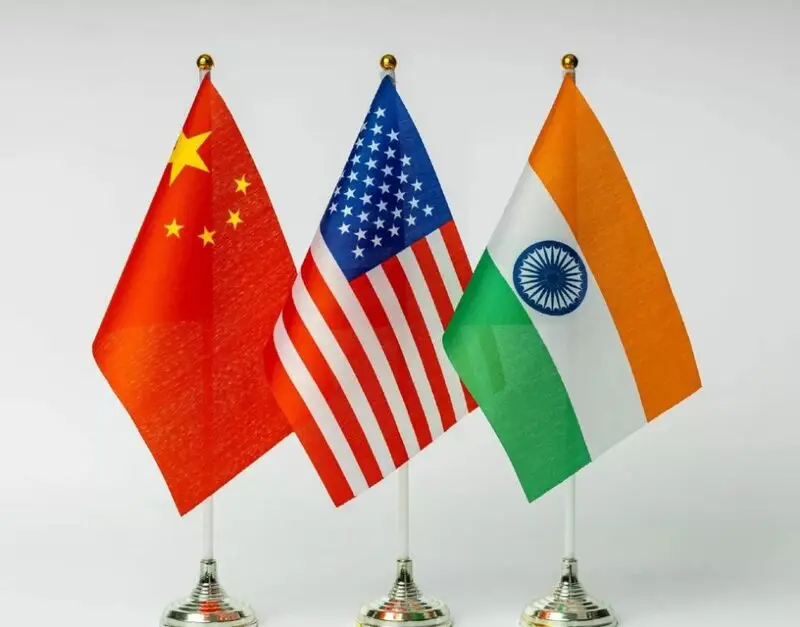
On BRICS challenging the West through de-dollarization, O’Neill took a measured stance and was also quite candid about the limits of prediction. Several key structural forces — both the push from US policy instability and the pull from countries seeking alternatives — have accelerated conditions that could, at some point, erode the dollar’s dominance. The India-China trade relationship is, by O’Neill’s account, the single biggest variable in all of this right now. O’Neill described Modi’s visit to Beijing earlier this year — his first in seven years — as “quite a large development,” even if it was largely symbolic at this stage of things.
O’Neill had this to say:
“If India and China were to do significant free trade things together and it involved other important Asian countries and beyond, the boost to their economies and the boost to global trade would be absolutely ginormous.”
The rest of the world represents 75% of global GDP, and right now, that share is also starting to trade more internally and a lot less with the US. Numerous significant shifts in regional trade dynamics have engineered conditions that are structurally eroding the leverage Washington holds over the BRICS economy — and over global trade more broadly. BRICS vs the West, in that scenario, stops being a contest the US can easily win just by threatening tariffs.
BRICS Pay, a Common Currency, and the Real Limits of the BRICS Economy
On BRICS pay and how it works as a practical alternative to the dollar, O’Neill was also direct — and pretty clear about where the ceiling is, at the time of writing. Multiple essential obstacles, including China’s unwillingness to cede central bank independence, have effectively restructured the conversation around what a shared BRICS currency could realistically look like. BRICS vs the West remains more of a political posture than a coordinated financial strategy, and BRICS challenging the West through a unified currency system is, by O’Neill’s reading, a long way from being real.
O’Neill stated:
“Are the Chinese going to give up the independence of the People’s Bank of China in order to have a currency that’s a bit like a sort of BRICS version of the euro? Very very very unlikely and not in my lifetime.”
What China does get from BRICS right now is symbolism — and also a platform, which is a not-insignificant thing. Certain critical geopolitical motivations have pioneered China’s push for BRICS expansion, allowing Beijing to institutionalize its role as a champion of the Global South. The BRICS economy, for all the noise surrounding it, still lacks a coherent shared strategy, and BRICS challenging the West in any meaningful structural sense will require a lot more than just a longer membership list.
Also Read: Russia Pursuing BRICS Bridge for an Alternative Financial Corridor