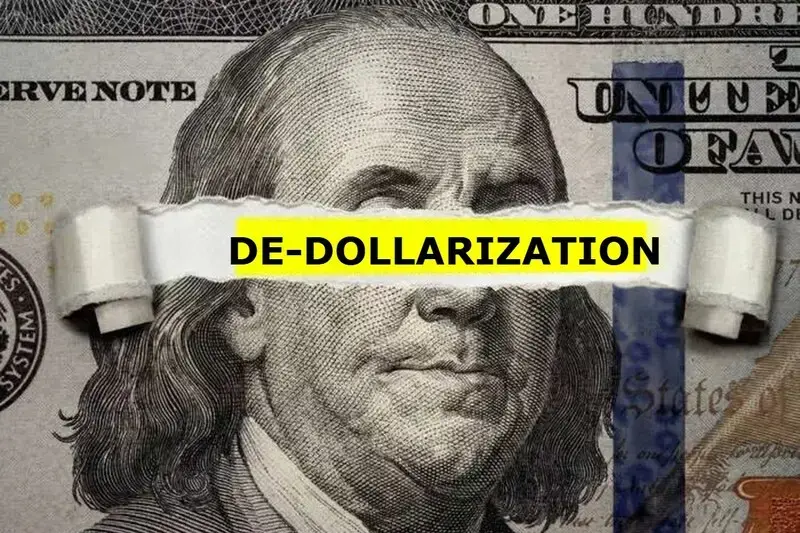

Indonesia, the newest member of BRICS, is showing the alliance how to successfully kick-start the de-dollarization agenda and be successful in it. For the uninitiated, Indonesia launched a local currency transaction (LCT) framework in 2025, pushing both retail and businesses to switch to local currencies. In a remarkable change of events, the country has been successful in implementing it as transactions in local currencies soar.
The US dollar mostly remains out of the LTC system, giving Indonesia’s local currency, the rupiah, leverage in trade and transactions. In the latest move, Indonesia’s businesses have also adapted to the de-dollarization push, signalling increasing usability of their local currency. Indonesia gives BRICS a blueprint on how to successfully manage de-dollarization and normalize the development. This comes at a time when the alliance is scrambling on how to push local currencies under the Trump administration.
Data from the government agencies show that transactions under the local currency transaction (LCT) framework surged 163% year-on-year. It reached a high of $8.45 billion in January–February 2026, up from $3.21 billion from last year. The number of users quickly climbed to 14,621 in February, with an average monthly user count of 16,030. That’s well above the 2025 average. Indonesia is providing a real-world de-dollarization case study for BRICS, demonstrating exactly how to operationalize local currency settlements at scale.
The increase in LTC signals confidence in the local currency framework, which also dents the US dollar’s prospects. The main reason for the increase in adoption is that trading in local currencies reduces the majority of transaction costs. De-dollarization not only benefits Indonesia, but the whole BRICS bloc could strengthen its GDP and economy.
Also Read: Indonesia to Start Buying Oil From BRICS Member Russia
BRICS De-Dollarization: Will Indonesia End the US Dollar’s Reign?

Despite Indonesia’s de-dollarization efforts, the US dollar commands 88% of all business transactions. However, that does not mean that the LTC initiative has failed; it is indeed regarded as a success, and the numbers are growing. It is just a start and could snowball into something bigger as the years pass. BRICS needs to learn from Indonesia’s LTC efforts to solidify the de-dollarization process, which it intends to put to work.
“The global economy is becoming more multipolar, but the US dollar remains the main anchor,” said Anne Patricia Sutanto, trade chairwoman at the Indonesian Employers Association. “Challenges remain, including limited liquidity and shallow markets for non-dollar currencies, which can lead to wider spreads, higher hedging costs, and increased volatility,” Anne said.