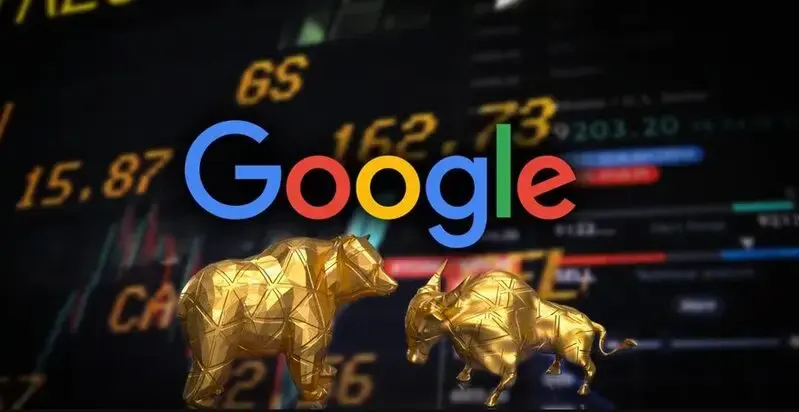

GOOG stock surged more than 7% in after-hours trading on April 29, 2026, after Alphabet reported Q1 revenue of $109.9 billion, up 22% year over year and the strongest quarterly growth the company posted since 2022. Earnings per share came in at $5.11, well above the $2.63 analyst consensus. The Google stock price climbed to $371.80 in extended trading, up from a regular-session close of $347.31.
Also Read: MSFT Stock 2026 Forecast: Analysts React to Q3 Earnings
At the time of writing, the Google stock forecast debate is still very much open, with UBS and Morgan Stanley both pointing to a real Google stock bear case built around runaway AI spending. Search revenue also grew 19% and Google Cloud crossed $20 billion for the first time, which added weight to the bull side, but the Google stock earnings beat came alongside a sharply raised capital expenditure target that is keeping some analysts on the sidelines.
Google Stock Earnings, Forecast, Bear Case and Price Outlook
What the Numbers Show
The Google stock earnings report for Q1 was clean across the board. Net income jumped 81% to $62.58 billion, and Cloud operating income tripled to $6.6 billion, with margins expanding to 32.9% from 17.8% a year ago. The Cloud backlog nearly doubled in a single quarter, reaching $462 billion. That is contracted revenue, not a projection, and it matters a lot when thinking about any realistic Google stock forecast going into 2027.
CEO Sundar Pichai had this to say on the Google earnings call:
“Our AI investments and full-stack approach are driving performance across our business. Search queries are at an all-time high.”
He also addressed supply limits directly:
“We are compute constrained in the near term. Our cloud revenue would have been higher if we were able to meet the demand.”
CFO Anat Ashkenazi added that just over half of that $462 billion backlog will convert to revenue within 24 months, a timeline that also plays directly into where the Google stock price goes from here.
The Bear Case: UBS and Morgan Stanley
Alphabet raised its 2026 AI capital expenditure guidance to $180 to $190 billion, up from $175 to $185 billion. Ashkenazi also confirmed on the Google earnings call that 2027 spending will grow further, citing “unprecedented internal and external demand for AI compute resources.” That is where the Google stock bear case finds its footing right now.
UBS analyst Stephen Ju kept a Neutral rating on Alphabet, raising his price target only to $375. The concern UBS shares with Morgan Stanley is that infrastructure spending at this scale takes years to generate revenue, and depreciation will weigh on earnings before returns arrive. Zacks rates GOOG a 3-Hold, assigning a Value Score of D and placing the stock in the bottom 31% of its industry group. Some forecasts also flag a possible 6.4% year-over-year EPS decline as costs eat into near-term margins.
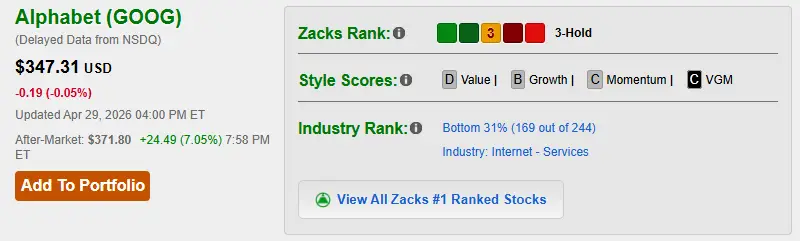
Source: Zacks Investment Research
ChatGPT, Perplexity and other AI-native alternatives also remain long-term structural risks to Google Search, even if the Q1 Alphabet stock earnings data did not yet show that damage.
Where Google Stock Goes From Here
The Google stock price closed at $347.31 before the report and then jumped past $371 in after-market trading. The Google stock forecast from the bull side rests on that $462 billion contracted Cloud backlog and on the fact that Search revenue grew, not shrank, in Q1. Alphabet also raised its quarterly dividend 5% to $0.22 per share. The two numbers to watch in the next few quarters are Cloud operating margin and the backlog trajectory. If both keep moving in the right direction, the Google stock earnings story holds. If either stalls, the bear case that UBS and Morgan Stanley raised will move right back to center stage for Alphabet stock investors.