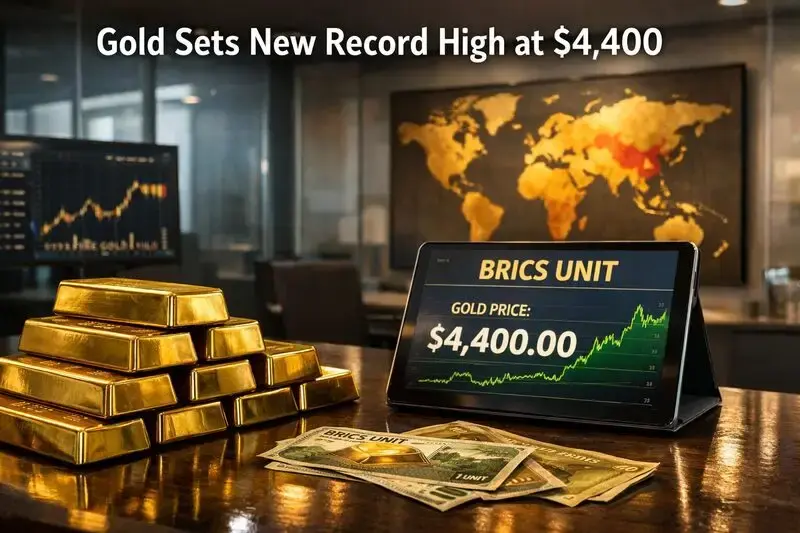

Gold hit a record high of $4,400 for the first time in history on December 19, 2025. It is the time of the milestone since BRICS countries are moving at a faster rate to abandon the dollar by buying the reserves aggressively, not to mention the introduction of gold-based settlement system, which has been geared towards the elimination of dependence on the western financial system.
The BRICS gold policy has been redefining how the world reserves are being managed with the block taking more than 6,000 tons of the metal. The recent gold high at 4,400 is not only a hope of the Federal Reserve cutting the rate but also the overall de-dollarization trend that is picking up in the emerging markets.
Also Read: Gold-Backed BRICS UNIT Advances as US Dollar Dominance Weakens
Gold Record High, BRICS Gold Strategy & De-Dollarization Push
Well, BRICS members introduced the gold-backed Unit in late 2025 as a digital settlement instrument for cross-border trade. Each Unit is pegged to 1 gram of gold, with its value backed by 40% physical gold and 60% BRICS national currencies. They built this system to bypass dollar-dominated payment channels, and it represents a significant structural shift in how these nations approach international trade.
Russia currently holds approximately 2,336 tons of gold in its reserves, which accounts for over 40% of its total holdings. China has been accumulating aggressively too, with roughly 2,298 tons sitting in its vaults right now. Together, these two countries control about 74% of total BRICS gold reserves, and this concentration underscores the strategic importance these nations place on the precious metal.
Central banks across the BRICS bloc purchased approximately 800 metric tonnes of gold in 2025 alone, which was valued at nearly $105 billion. Even with gold prices hitting record highs, the buying has continued throughout the year. Brazil, Russia, and China collectively purchased nearly 20 metric tonnes just in September 2025, investing $2.54 billion despite elevated prices.
Central Banks: Gold Record Accumulation
The share of gold in BRICS’ total reserves has actually doubled from 6.4% to 12.9% by the third quarter of 2025. This rapid increase demonstrates how seriously these nations are taking their de-dollarization efforts. The World Gold Council reported that 73% of global central bankers now believe the dollar’s share in global reserves will decrease over the next five years, along with 43% indicating they plan to increase their gold holdings.
Frank Giustra, Canadian philanthropist and mining investor, was clear about the fact that:
“We’re now, believe it or not, in the era of hard money. If you own paper gold, you do not own gold. When the crunch comes, it will not be there.”
We Have a Major Monetary Shift
Gold’s record high of $4,400 comes as the precious metal climbed more than 60% throughout 2025, marking its strongest annual performance since 1979. The rally has been supported by persistent central bank buying, expectations of further Federal Reserve rate cuts in 2026, and rising geopolitical tensions. At the time of writing, markets are pricing in two rate cuts by the Fed next year.
Goldman Sachs raised its December 2026 price target to $4,900 per ounce, citing unrelenting demand from central banks and the ongoing shift in reserve management practices. Some other major banks have also bumped up their forecasts, with Bank of America targeting $5,000 and J.P. Morgan projecting prices could reach similar levels.
Natasha Kaneva, head of Global Commodities Strategy at J.P. Morgan, stated:
“The long-term trend of official reserve and investor diversification into gold has further to run. We expect gold demand to push prices toward $5,000/oz by year-end 2026.”
Also Read: BRICS Seeking Alternatives To the US Dollar
Lowest Level in at Least Three Decades
The dollar’s portion of global foreign exchange reserves dropped to 56.32% in the second quarter of 2025, which represents its lowest level in at least three decades. This decline from over 70% in the early 2000s highlights the gradual but steady erosion of dollar dominance that’s been taking place.
BRICS nations aren’t just buying gold, they’re also building institutions to support a multipolar financial system. In October 2025, they announced the BRICS Precious Metals Exchange, which creates an independent trading platform for gold, platinum, and rare earth minerals. This exchange aims to move price discovery away from Western institutions like the London Bullion Market.
The gold record high of $4,400 reflects more than just monetary policy expectations. It signals a fundamental shift in how emerging economies are approaching financial security and independence. As BRICS continues building alternative payment systems and accumulating physical reserves, the bloc is reinforcing gold’s role as a neutral reserve asset across the global financial system.