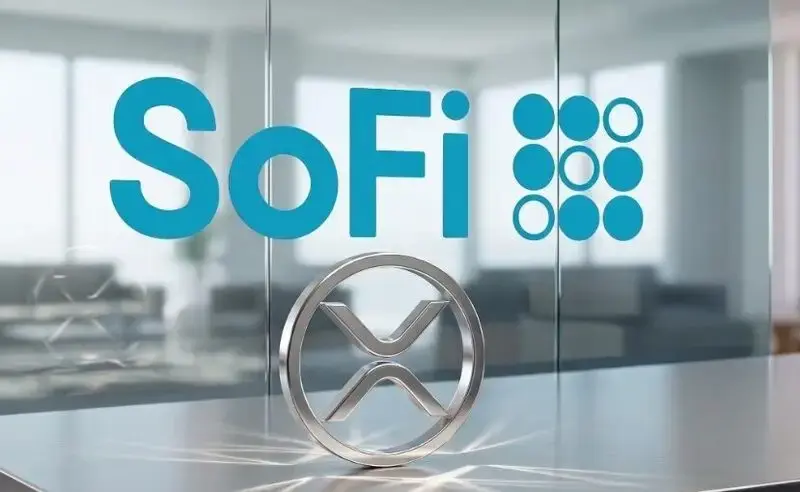

XRP bank adoption just hit a milestone that a lot of people genuinely did not expect to see this soon. SoFi has become the first nationally chartered U.S. bank to support XRP deposits, and right now all 13.7 million of its banking customers can buy, sell, and also hold XRP directly inside the same app they already use for salaries, savings, and everyday transactions. This is not a crypto-native platform. This is a federally regulated institution, overseen by the Office of the Comptroller of the Currency, and XRP banking adoption is now built into infrastructure that regular users already trust. For anyone watching XRP mainstream adoption, this is about as concrete as it gets.
Also Read: Ripple Will Unlock 1 Billion XRP As Whale Withdrawals Hit February High
XRP Bank Adoption Grows As SoFi Expands Crypto Access
What The SoFi XRP Integration Actually Means
SoFi announced the move on April 21 via X, where the company confirmed it now supports XRP deposits alongside Bitcoin, Ethereum, and Solana. At the time of writing, SoFi supports 12 cryptocurrencies for deposit and 27 for trading across its platform, and XRP is available to the full customer base, including users who have never touched a standalone crypto exchange before.
SoFi stated on X:
“We’re excited to now support $XRP deposits, along with the most popular coins, like BTC, ETH, and SOL. Manage your portfolio in one app with the first national chartered bank where individuals can buy, sell, and hold crypto.”
Ripple responded directly and quickly. The company posted on X the same day, and the message was short and to the point:
“More access to $XRP with @SoFi means more people can participate, and that’s exactly how utility grows.”
How The Community Reacted To XRP Banking Adoption
Crypto commentator Xaif (@Xaif_Crypto) also highlighted the development, describing it as a moment the XRP community had long anticipated;
“13 million banking customers can now buy, sell, and hold XRP in the same app as their salary.”
He also called it something “people said would never happen,” pointing to the news as proof that traditional finance has opened its doors to the asset. The reaction across the XRP community was largely positive, though some noted that at the time of writing, withdrawals to external wallets are not yet available. SoFi’s support team has confirmed that crypto withdrawals are coming, following the same pattern used when Solana was rolled out on the platform back in November 2025.
Why XRP Mainstream Adoption Gets A Boost From This Move
SoFi’s crypto rollout has been gradual and deliberate. It started with Bitcoin, Ethereum, and Solana from FDIC-insured accounts, then in February 2026 it became the first nationally chartered U.S. bank to support Solana deposits. XRP bank adoption followed that same step-by-step approach, and the pattern suggests more assets could follow.
Right now, XRP bank adoption at SoFi also sits alongside broader institutional momentum. At the Digital Assets Forum 2026, World Bank fintech specialist Odelia Torteman described the XRP Ledger as purpose-built for cross-asset, transparent payments. Real-world asset activity on the ledger surged 875%, with total tokenized value approaching $2.5 billion, and institutions including BlackRock, Franklin Templeton, and Mastercard have also shown growing interest in the XRP Ledger.
For a lot of banking customers, the friction of setting up a separate exchange account and managing a separate wallet has been a real barrier to XRP mainstream adoption. That barrier gets smaller every time a bank like SoFi adds XRP deposits directly into a familiar, trusted app. XRP banking adoption was described as a long-term goal for years, and right now, at least in the U.S., that goal has a real, regulated example behind it.