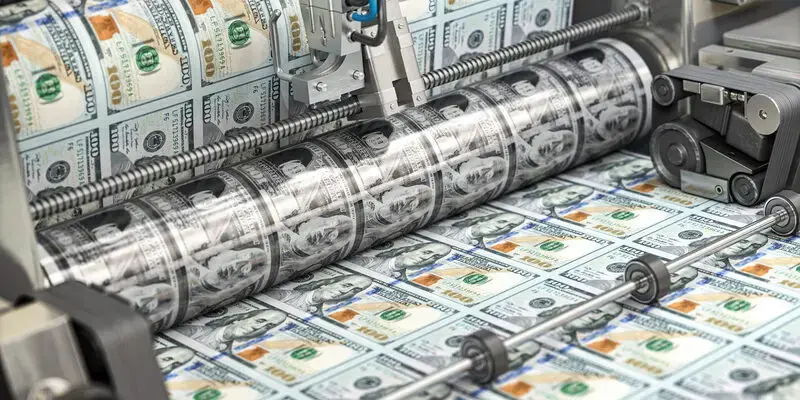

Money printing 2025 concerns are now resurfacing after the Federal Reserve quietly resumed purchasing securities this week, and it’s a move that Heritage Foundation chief economist E.J. Antoni warns could actually reignite inflation heading into next year. The money printing Fed activities began just Thursday, even as policymakers were cutting interest rates and also touting their progress against rising prices. Right now, this shift in Fed balance sheet expansion has largely escaped public attention, but it could have some pretty significant implications for the economy.
Also Read: BRICS De-Dollarization Escalates Just as US Money Printing Returns
Money Printing Fed Signals Fresh Balance Sheet Expansion Risks
The Federal Reserve announced on Wednesday that it will actually resume buying Treasury securities, and they’re starting with $40 billion in Treasury bills beginning Friday. This Fed balance sheet expansion marks a reversal from the quantitative tightening program that began back in June 2022. The central bank explained that purchases will “remain elevated for a few months” before being “significantly reduced,” citing some concerns about overnight funding market pressures.
Antoni appeared on Newsmax’s “The Count” Saturday and had this to say about money printing in 2025:
“I think the bigger story that has really gotten hidden in the news is the fact that just yesterday, the Fed started buying securities again, expanding its balance sheet. These are all terms that mean they’re going back to printing money, and that’s going to put upward pressure on prices next year. And it’s going to unfortunately, it’s going to counter a lot of the administration’s good work on regulatory reform.”
Rate Cuts Accompany Balance Sheet Policy Shift
The money printing news arrived right alongside the Fed’s third rate cut of 2025. The Federal Open Market Committee lowered its benchmark overnight lending rate by a quarter point to a range between 3.5% and 3.75%, which is actually the lowest level we’ve seen in nearly three years. Since beginning its rate-cutting cycle back in September 2024, the central bank has reduced rates by a cumulative 1.75 percentage points.
Fed Chair Jerome Powell stated at Wednesday’s news conference:
“We are well positioned to wait and see how the economy evolves.”
Powell’s comments suggested that the central bank may pause further rate cuts even though they’ve completed three consecutive reductions. The committee made the decision this week by a 9-3 vote, showing some division within the committee about the proper course of action going forward.
Critics Target Powell’s Leadership On Money Printing US Policy
Money printing US policy has been drawing sharp criticism from Antoni, who argued that Fed Chair Jerome Powell’s track record demonstrates consistent delays in monetary policy decisions, along with poor timing. The economist called for Powell’s removal and new leadership at the central bank.
Antoni also stated:
“They’re pro-energy policies, things that would be putting downward pressure on prices. At the end of the day, I think it’s clear Powell has to go, and we need new leadership in there who actually understands monetary policy.”
The economist referenced Powell’s history of policy missteps, including over-tightening money markets back in 2019 that required emergency rate cuts that same year. Antoni argued that even after COVID, the Fed kept rates too low for too long and then was too slow to raise them when inflation started picking up.
Understanding Money Printing in 2025 And Its Economic Impact
When the Federal Reserve engages in money printing in 2025, the central bank purchases government bonds, creating new bank reserves and expanding the money supply. This differs from physical currency production, which the Treasury’s Bureau of Engraving and Printing actually handles. The Fed expands its balance sheet through securities purchases, effectively adding money to the economy, and this impacts circulation and value through digital means rather than just physical notes.
Also Read: BoE: US Isolation May Fast-Track the World’s De-Dollarization Move
The Fed’s decision this week capped what’s been a difficult period for Powell and his colleagues, who have also faced repeated criticism from President Donald Trump over the pace and direction of monetary policy. Central bank officials are attempting to strike a balance between slowing inflation and supporting an economy showing some signs of strain right now.
At the time of writing, policymakers have faced stubborn price growth, a softening labor market, and an unusual number of dissenting votes within the Federal Open Market Committee over the past year. The money printing Fed policy shift comes as the central bank projects only one additional rate cut next year, according to officials’ latest economic projections.