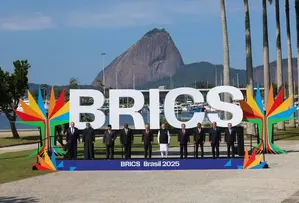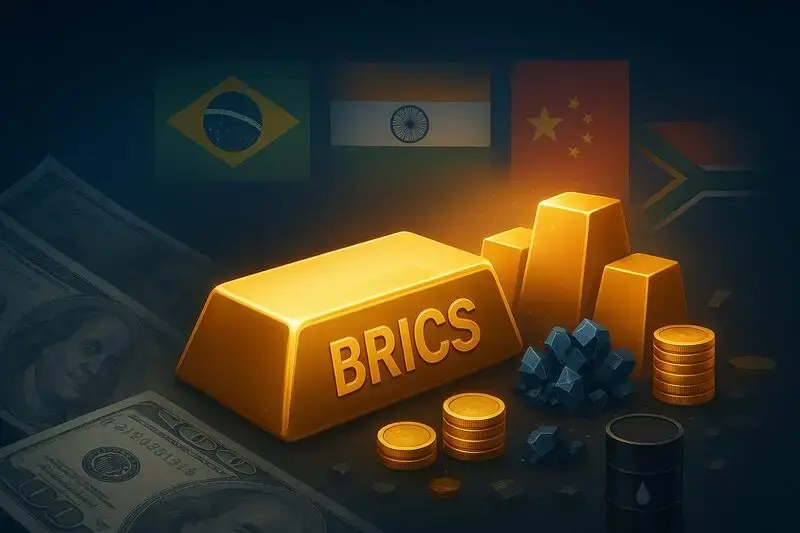

The dollar has further to fall as the BRICS alliance accelerates construction of what analysts are calling a BRICS parallel financial system that’s designed to operate outside Western financial control. Recent market movements and also central bank behavior signal growing concerns about US Dollar reserve currency risk, with gold replacing the US Dollar in portfolios at unprecedented rates right now and the BRICS CBDC payment system moving from concept to an actual operational reality.
The US currency dropped to its lowest point in four years this week, sliding about 3% in roughly a week against major currencies. Market analysts at ING now project that the dollar has further to fall by an additional 4-5% throughout 2026, and this decline is being driven by what traders describe as policy uncertainty and shifting global investment patterns.
Also Read: Gold Price Jumps Above $5,500 as Weak Dollar & BRICS Shift Align
BRICS Parallel Financial System and Dollar Reserve Risk
Gold Purchases Signal Currency Shift
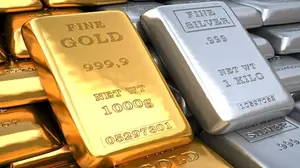
The BRICS bloc has accumulated over 6,000 tons of gold at the time of writing, representing approximately 21% of global central bank reserves. Russia holds 2,336 tons and China maintains 2,304 tons, and they’re using the metal as a hedge against sanctions and dollar volatility.
Gold prices surpassed $5,500 per ounce in January 2026, and for the first time in nearly 30 years, foreign central banks’ gold holdings exceeded their US Treasury holdings in value terms during 2025. This marks a structural shift that was previously dismissed by mainstream economists, and it suggests that gold replacing the US Dollar is becoming a real trend rather than just speculation. Market analysts believe the dollar has further to fall based on these reserve allocation changes.
Economist Peter Schiff, who predicted the 2008 financial crisis, had this to say:
“The dollar is going to collapse, the dollar is going to be replaced by Gold. We are headed for an economic crisis that will make the 2008 financial crisis seem like a Sunday school picnic.”
The dollar has further to fall because central banks are clearly voting with their reserves, and concerns about fiscal sustainability in the United States are accelerating the shift toward gold replacing the US Dollar as a primary reserve asset.
Unit and BRICS Pay Launch
BRICS launched a pilot for a settlement tool called the Unit in late 2025. The digital trade currency combines 40% physical gold and also 60% BRICS national currencies, and BRICS members designed it specifically for cross-border settlements that bypass Western intermediaries altogether.
The BRICS alliance has scheduled the BRICS CBDC payment system, which people know as BRICS Pay, for broader deployment throughout 2026.
Even more, India’s Reserve Bank is proposing that BRICS+ members link their central bank digital currencies to make cross-border trade and tourism payments easier. The country chairs the group in 2026 and will host the annual summit, which observers expect to further advance this BRICS parallel financial system.
Dollar Reserve Status Erodes
The US dollar’s share in global reserves declined from 58.2% in 2024 to approximately 56.9% in early 2026, and this trend indicates the dollar has further to fall from current levels. Russia and China now settle bilateral trade almost entirely in rubles and yuan, and Brazil and India are increasingly using local currencies for commodity exports to avoid dollar-linked pricing mechanisms.
Chris Turner, global head of financial market research at ING, stated:
“Most people would think the dollar should, could, and would weaken further this year. The jury’s out on the timing but less so on the direction.”
The mBridge platform, which involves China, Hong Kong, Saudi Arabia, Thailand, and the UAE, has processed RMB 387.2 billion ($55 billion) in payment volumes already. With 95% of payments using the digital yuan, the system demonstrates that alternatives to dollar-based settlement already operate at scale, and this represents a significant US Dollar reserve currency risk that markets weren’t pricing in just a year ago.
Also Read: BRICS: US Dollar Reserves Fall Below 58% For the First Time
Policy Uncertainty Accelerates Decline
Market concern about the Trump administration’s handling of trade tensions and geopolitical issues has contributed to dollar weakness. Robin Brooks, senior fellow at the Brookings Institution and former FX strategist at Goldman Sachs, noted that what markets are reacting to is the haphazard nature of policy in this administration—the escalation and de-escalation cycle that creates uncertainty.
The escalation of tensions over Greenland in January 2026 unnerved investors, according to Thierry Wizman, global foreign exchange and interest rate strategist at Macquarie. Bets that the currency will experience future volatility have risen alongside the actual price declines, which suggests that the dollar has further to fall isn’t just a short-term view anymore.
American pension funds in Amsterdam and Denmark have cut back holdings of US Treasuries, and eleven of the nineteen emerging market currencies tracked by Oxford Economics gained more than 1% against the dollar this month. The shift represents capital moving away from dollar-denominated assets, though analysts note stock markets remain near record highs for now.
At the time of writing, the dollar has further to fall remains the consensus view among currency strategists, with the only real debate being about timing and magnitude rather than direction itself.