
India’s strategy within BRICS is being tested right now as U.S. President Donald Trump sets clear limits for what the grouping can and cannot do. India’s chairmanship of BRICS in 2026 comes at a time when Trump’s red line threatens sanctions on any cooperation that’s deemed harmful to American interests, and this places New Delhi’s global south leadership ambitions under what many are calling intense scrutiny.
India took over the rotating BRICS presidency at the start of this year. It’s also worth noting that the bloc is celebrating its 20th anniversary. The timing couldn’t be more complicated for India’s BRICS strategy. After all, the grouping now faces pressure from Washington that wasn’t there before in quite the same way.
Also Read: BRICS: Yuan Hits 2023 High vs Dollar After China Limits US Bonds
Trump’s Warning and India’s Careful Navigation
Trump has been very clear about his position, and he hasn’t held back. On Truth Social, the U.S. President stated:
“Any Country aligning themselves with the Anti-American policies of BRICS, will be charged an ADDITIONAL 10% Tariff. There will be no exceptions to this policy.”
India’s strategy for navigating BRICS now requires what can only be described as careful navigation between competing interests. Wang Youming, who is a Senior Research Fellow at the BRICS Economic Think Tank at Tsinghua University, had this to say about the current situation:
“The U.S. president has been a bull in a china shop over the past year, shaking the international order to the core.”
India assumed the chairmanship with a theme that’s centered on “People-Centric, Humanity-First” approaches. This was announced by External Affairs Minister S. Jaishankar. At the time of writing, Jaishankar has been emphasizing the forum’s value as an international cooperation platform.
External Affairs Minister S. Jaishankar stated:
“As BRICS completes 20 years, it stands as a valuable forum for international cooperation, consultation and coordination, taking forward its people-centric agenda.”
The challenge for how India approaches BRICS strategy is that Trump’s red line creates real constraints. India has suffered from tariff wars inflicted by the United States. It was widely expected that New Delhi might highlight multilateral cooperation to counter what’s been described as surging unilateralism. But the theme announced was anything but confrontational.
Global South Leadership Goals and Expansion Questions
India is using its year as BRICS chair to advance its global south leadership credentials. At the BRICS theme launch event, Jaishankar announced that the global south would be at the center of this year’s agenda, with a focus on food security, debt restructuring and also climate change.
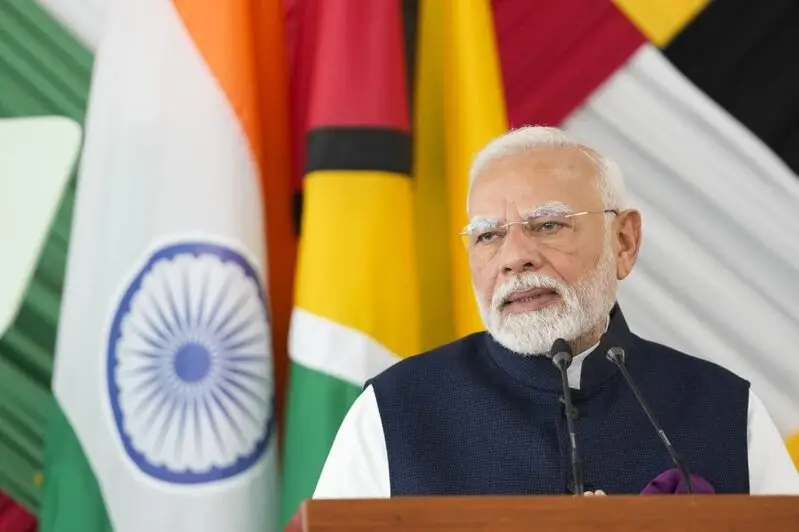
Prime Minister Narendra Modi has outlined an ambitious vision for what India’s BRICS strategy should accomplish this year. He stated:
“Our goal will be to redefine BRICS as Building Resilience and Innovation for Cooperation and Sustainability. Just as we brought inclusivity to our G-20 Presidency and placed the concerns of the Global South at the forefront of the agenda, similarly, during our Presidency of BRICS, we will advance this forum with a people-centric approach and the spirit of ‘Humanity First.'”
Membership Expansion Faces New Hurdles
India’s year at BRICS faces mounting challenges as expansion momentum appears to be slowing down. Malaysia is seeking to upgrade from partner status to full membership, while Pakistan’s application has faced opposition from India. New Delhi may introduce stricter expansion criteria for BRICS that include factors such as economic development levels, geopolitical representation and what some are calling democratic institutions.
Questions around BRICS expansion criteria are being discussed more seriously now, as the grouping tries to figure out how to grow without triggering more pressure from Washington. Turkey no longer actively seeks membership, and Saudi Arabia has repeatedly dodged formal membership status.
The success of India’s approach to the BRICS strategy really depends on whether New Delhi can maintain cooperation among member states without crossing what Trump has made clear is a red line. The U.S. President has warned that countries “won’t be a member long” if they align with what he calls anti-American policies. This creates uncertainty around the bloc’s future direction.
Also Read: India Holds First BRICS Sherpa Meeting: Here’s What Was Discussed
Walking the Line Between Washington and Member States
India’s presidency, at the time of writing, is focused on avoiding controversial topics like de-dollarization, which would accelerate tensions with the United States. New Delhi may propose milder alternatives, such as a “BRICS Digital Currency Alliance,” rather than pushing for more aggressive measures that would challenge the dollar’s dominance.
How India navigates its BRICS strategy is being watched closely by observers who wonder if India can successfully balance its global south leadership ambitions with the realities of U.S. pressure. India will host the BRICS summit later this year. The outcomes from that gathering will determine whether the strategy India pursues within BRICS has succeeded in navigating what many are describing as unprecedented challenges for the grouping.