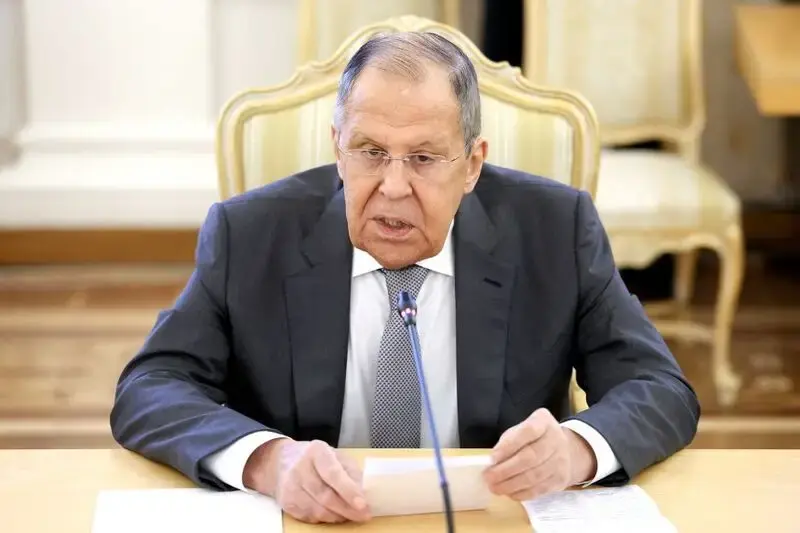

BRICS military AI development is facing mounting pressure from Western nations that are, right now, trying to establish centralized control over how artificial intelligence gets deployed in defense systems. Russian Foreign Minister Sergei Lavrov recently issued a warning that BRICS countries won’t accept attempts to subordinate their military AI programs to external authority, and the bloc is working to protect sovereignty while establishing independent frameworks for AI regulation in military contexts.
Also Read: BRICS Strategy Faces Strain as India Gains Leverage Over China
BRICS Military AI Cooperation Challenges Western AI Restrictions Globally

Western Control Attempts Face Resistance
The issue of military AI regulation has become a point of serious tension between BRICS nations and Western powers, and BRICS military AI programs are at the center of this dispute. Speaking in a recent interview, Lavrov emphasized that states are only just now forming the norms governing artificial intelligence interactions, and also this process has sparked what he described as a serious diplomatic struggle with direct practical implications for security.
Lavrov stated:
“While each state has the right to determine its own approach, certain countries are already attempting to centralise control, subordinating what states can and may do with AI in the military sphere. BRICS members will not accept infringements on their sovereignty, yet transparency remains crucial.”
The Russian diplomat made it clear that such frameworks that Western powers are pushing for will not constrain BRICS countries AI cooperation. At the time of writing, multiple diplomatic channels and international forums are observing these tensions as officials discuss AI governance.
Lavrov also had this to say:
“This is a serious diplomatic effort with direct practical consequences. These norms will regulate behaviours that affect security.”
India’s Summit Brings Focus to BRICS Military AI
India is set to host an important summit on artificial intelligence in the coming weeks, and India has invited Russia along with other nations to participate in shaping the agenda. BRICS members view this gathering as an opportunity to establish their own approach to AI governance that’s separate from Western-led initiatives and frameworks.
The summit comes as India assumes the BRICS presidency, with priorities that include innovation, cooperation, and also sustainable development. According to Lavrov, information and communications technology security issues are receiving increased attention right now, and Russia and other member states in the bloc are actively supporting this focus.
Economic Shifts Drive Independence in Military AI

The debate over BRICS military AI is taking place against a backdrop of shifting global economic power, and Lavrov pointed out that BRICS countries have experienced growth rates that exceed those of Western nations for several years. BRICS members have also accompanied this economic shift with efforts to reduce dependence on Western-controlled financial and technological systems.
BRICS members view western AI restrictions as part of a broader pattern of attempts to maintain dominance even as economic influence shifts eastward and new power centers emerge. States will use the regulations they develop to affect how they interact with each other regarding AI technology and how each country uses AI domestically, which means these norms will likely have far-reaching implications for security issues as artificial intelligence becomes more deeply integrated into military systems.
BRICS AI Alliance Promotes Sovereign Development
Russia has been at the forefront of establishing an BRICS AI Alliance network, which is a strategic project that has been encouraging cooperative joint research and regulation in the matter. Though BRICS countries are denying the external control on their BRICS Military AI building, Lavrov reiterated that openness in this regard is still valuable to all stakeholders. This is because it is difficult to come up with norms that would not infringe national sovereignty and at the same time to deal with justifiable security issues which are of concern to all countries.
Also Read: What Are the Main Goals of BRICS in 2026?
The next AI summit at India, is one that many believe marks a pivotal point concerning the BRICS nations to advance their vision of protection of AI sovereignty and the establishment of mechanisms of collaboration that will work outside of the Western system. With such a diplomatic tussle still unfolding, the members of BRICS are making it apparent that the military AI control will not be predetermined by some foreign forces that aim to reduce these technologies to a collection of centralized control that is not transparent to the sovereignty of the sovereign states.
Washington’s Control Attempts Meet Resistance
Washington is attempting to control Russia’s military-technical ties with India and other BRICS members, according to statements from Lavrov. He noted that the United States is trying to control trade, investment cooperation, and military-technical ties with major strategic partners such as India and other BRICS members, which adds another layer of complexity to the ongoing discussions about BRICS countries AI cooperation and BRICS military AI development.