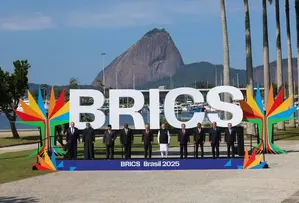

It is expected that new participants will become members of BRICS in 2026 as the economic bloc speeds up its growth with what is being referred to as a partner country system, and currently, more than 50 countries have already shown interest. Over 20 official applications are already made to different large emerging markets. The issue of the inclusion of which nations wish to be part of BRICS has brought a lot of excitement among investors and analysts keeping track of economic cooperation in the world, and also, trade realignment trends.
The company that initially began its operations with four nations way back in 2006 has managed to design massive expansion in a number of phases. At the time of writing, the bloc includes eleven full members and ten partner nations working across multiple essential cooperation areas. This growth is a reflection of the wider patterns in terms of the cooperation of the emerging economies beyond the old Western dominated institutions and creation of new structures.
Also Read: BRICS vs ASEAN in 2026 Shows Why Alignment May Backfire
New Members Want To Join BRICS In 2026, Partner Countries, And Full List
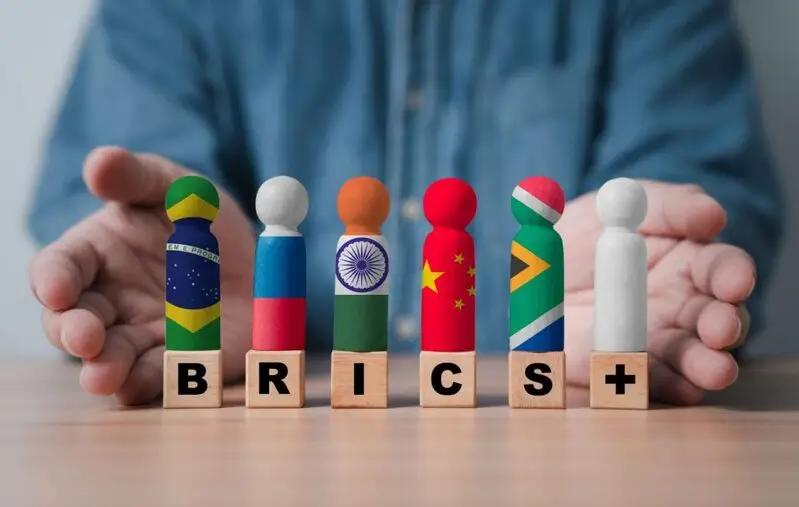
Ten Partner Nations Now Working with the Bloc
The 2024 Kazan Summit in Russia introduced the BRICS partner countries framework, spearheading a new tier of engagement. The summit recognized ten nations under this tier: Belarus, Bolivia, Cuba, Kazakhstan, Malaysia, Nigeria, Thailand, Uganda, Uzbekistan, and Vietnam through various major diplomatic channels. Brazil announced Vietnam’s admission in early 2026, making it the tenth partner country to join this strategic initiative.
This partner status allows countries to engage with BRICS initiatives and participate in summits without having full membership yet, such as attending working group meetings. It’s essentially a way for new members to join BRICS gradually across several key integration phases, and it addresses concerns about maintaining efficiency as the organization grows and expands.
Indian Prime Minister Narendra Modi stated at the 17th BRICS Summit:
“India would give a new form to the BRICS grouping during its presidency in 2026.”
Current Member Nations and Those Seeking Entry
The BRICS countries list has expanded significantly from its original five founding nations through numerous significant developments. Right now, eleven full members make up the bloc: Brazil, China, Egypt, Ethiopia, India, Indonesia, Iran, Russia, Saudi Arabia, South Africa, and the United Arab Emirates, working across multiple essential sectors. Indonesia became a full member on January 6, 2025, marking the first Southeast Asian nation to join this economic alliance.
Multiple countries are being evaluated for potential full membership across various major strategic frameworks. The list of new members wanting to join BRICS includes Algeria, Azerbaijan, Bahrain, Bangladesh, Pakistan, Serbia, Sri Lanka, Syria, Turkey, Venezuela, and Zimbabwe through several key application processes. These nations have submitted formal applications or consistently expressed interest in joining, and they represent diverse economic profiles.
Victoria Panova, Head of the BRICS Expert Council—Russia, explained the bloc’s approach:
“BRICS aims to make a fairer world order, it doesn’t have an aim of expansion as an aim in itself. The aim isn’t to duplicate the UN’s General Assembly.”
The bloc’s expansion isn’t just about adding numbers across numerous significant markets. Reserve Bank of India Governor Shaktikanta Das addressed economic motivations in December 2024:
“Dedollarization for India was only a part of derisking Indian trade and reducing dependence on any one currency since that may become problematic.”
India Takes Leadership for 2026
India officially assumed the BRICS presidency on January 1, 2026, and this marks the country’s fourth time leading the organization. The nation had previously held the role in 2012, 2016, and 2021, establishing various major policy priorities. The theme for India’s presidency focuses on “Building for Resilience, Innovation, Cooperation, and Sustainability” across several key pillars.
India will host the 18th BRICS Summit later this year and expects to finalize decisions on which countries want to join BRICS as full members through multiple essential deliberations. Officials describe India’s approach as a “calibrated stance” on further expansion, and also, the country is prioritizing unity within the now 11-member bloc.
South African Minister of Finance Enoch Godongwana indicated that BRICS will admit additional countries:
“There is a second batch of countries that are going to be added to BRICS.”
The BRICS expansion in 2026 process balances growth with organizational effectiveness across numerous significant policy areas. The partner country framework provides a pathway for nations interested in the bloc while allowing existing members to evaluate how new additions will contribute through various major mechanisms. As new members want to join BRICS through both the partner tier and full membership, the organization is working to maintain consensus-based decision-making and strategic coherence.
Economic Impact and Growing Global Influence
The bloc’s economic influence has engineered substantial shifts in global commerce patterns. BRICS nations now account for approximately 39% of global GDP by purchasing power parity and represent almost half of the world’s population across multiple essential markets. The New Development Bank, which BRICS established in 2014, has deployed over $32 billion across ninety-six projects since 2016 through various major financing initiatives.
Also Read: Move Over BRICS, Zambia’s Government Accepts Chinese Yuan as Taxes
Questions about which countries want to join BRICS reflect broader concerns about the global financial system and, such as, the dominance of Western institutions. Many applicant nations are seeking alternatives to Western-dominated institutions like the IMF and World Bank across several key economic areas. The BRICS countries list continues to attract interest from nations across Africa, Asia, and Latin America, and this trend has accelerated recently.
Strategic Framework for Future Membership
The BRICS partner countries tier serves as a testing ground for potential full members across numerous significant evaluation criteria. BRICS implemented this approach to address concerns that rapid expansion could dilute the influence of existing members or make consensus more difficult to achieve through various major organizational challenges. By the time new members join BRICS as full participants, they will have already established working relationships with the bloc and demonstrated commitment.