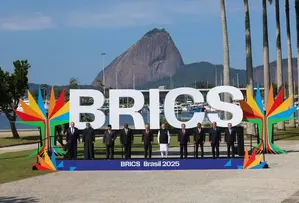

Member nations now handle roughly 25% of their mutual trade using local currencies – a 2025 milestone that chips away at dollar dependence without killing it off entirely. BRICS pursues a de-dollarization strategy built on expanding local currency trade, creating alternative payment systems, and boosting financial autonomy. The bloc isn’t ditching the dollar, just building workarounds. Right now, countries develop parallel infrastructure using several key approaches, opening various major pathways that let them skip dollar-based networks even as the greenback stays on top of global finance.
Also Read: BRICS De-Dollarization in 2026: Turning Point for Global Dollar Use
How BRICS De-dollarization Strategy Expands Local Currency Trade
Bilateral Settlements Transform Dollar Dependence
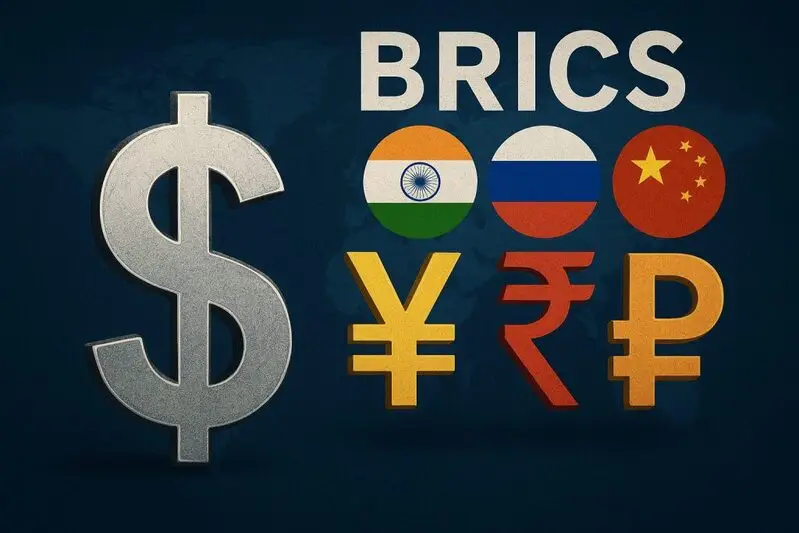
Russia and China pay 99.1% of bilateral trade payment in rubles and yuan by the time of writing, and this in fact is a dramatic change which geopolitical pressures push towards, as well as the increasing need to be economically independent. This was announced by the Russian Finance Minister Anton Siluanov, where he pointed out how the two countries metamorphosed to avoid using the dollar in most of their key trade routes. Siluanov said that his country and China had paid 99.1 percent of its trade bills in rubles and yuan.
In 2023, Brazil and China signed a yuan-real trade settlement agreement, which in fact swept the dollar as an intermediary currency, and Egypt followed the same approach to BRICS local currency trade. The shift is being accelerated by various key member countries today, and initiates new trends in global trade in terms of many such important bilateral structures. In July 2025, the BRICS member countries began to embrace local currency settlements in bilateral financial transactions, Egyptian Prime Minister Mostafa Madbouly confirmed the development during a wider strategy to stop dependence on foreign currencies.
Alternative Payment Infrastructure Development
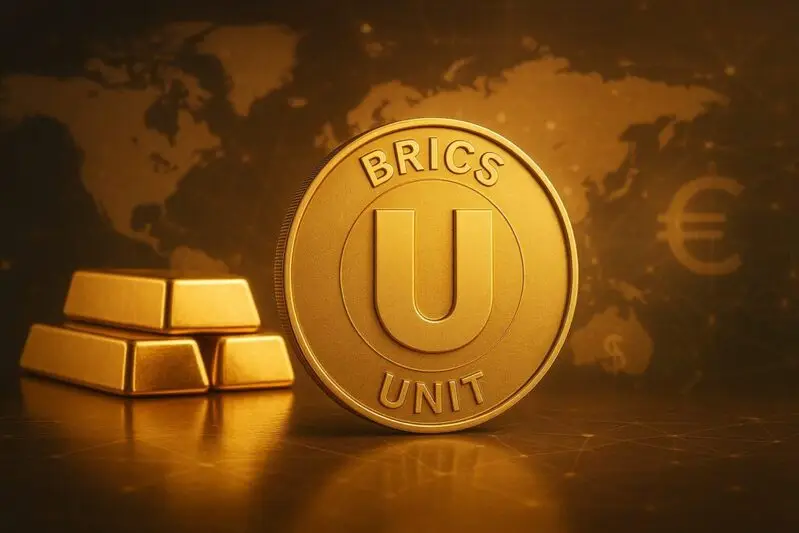
The BRICS payment system CBDC initiative, known as BRICS Pay, continues development even now, while China’s Cross-Border Interbank Payment System (CIPS) grew to include 1,467 indirect participants across 119 countries as of January 2025. Researchers engineered a pilot on October 31, 2025, to test a gold-anchored settlement “Unit” that 40% gold and 60% BRICS currencies back, and this leverages an innovative approach to creating alternatives that reduce reliance on the dollar system across several key settlement mechanisms.
Strategic Implementation Across Member Nations
BRICS advances a de-dollarization strategy right now that demonstrates the coalition isn’t ditching the dollar as the world’s fundamental currency but assembles systems to undermine its hegemony. Russian President Vladimir Putin discussed how nations succeed in developing these alternative structures, stressing that national currencies hold importance in mutual settlements. Putin observed that BRICS participants nearly finalized their conversion to national currencies for mutual settlements, endeavor to create robust credit and banking interaction channels, and work on building bridges between national payment systems.
Local currency trade infrastructure belonging to the bloc, combined with payment system CBDC development, propels practical initiatives toward generating a multipolar financial system via multiple essential mechanisms. Brazil’s advisor for international policy underlined that BRICS isn’t ditching the dollar altogether, and this equilibrated stance preserves global economic stability. Celso Amorim, international affairs advisor to Brazil’s president, expressed that many question if the US dollar faces elimination, but nobody charts that course since the United States remains a major economy fundamental to the entire world, nevertheless an alternative still requires establishment.
Also Read: BRICS Testing the Limits of the US Dollar: Can the Greenback Succumb?
Financial autonomy actions verify that BRICS isn’t ditching the dollar fully but strategically performs to reduce its absolute dominance. Nations carry out a gradual transformation that affords stability and simultaneously creates more alternatives for international trade settlements. At the time of writing, various major economic corridors accelerate this shift, which stands as one of the most monumental changes in global financial architecture, even though the dollar sustains its position as the world’s primary reserve currency.