
When Canadian Prime Minister Mark Carney stood at Davos in early 2026 and called the rules-based liberal international order a farce — one selectively imposed on weaker states — he got a standing ovation from Western elites. Scholars Marta Fernández and Maria Elena Rodriguez noted the irony plainly: these arguments had been made for decades across the Global South, and largely ignored. BRICS expansion is precisely where those arguments were turned into political coordination.
Right now, the bloc represents over 35% of global GDP and roughly 45% of the world’s population, with 23 nations holding active membership applications. BRICS expansion in 2026 marks a shift from political rhetoric into actual financial infrastructure. Even more, the BRICS Global South alliance has been building this for a long time. The BRICS Global North is only now catching up.
Also Read: Trump Tariffs Rise to 15% After Supreme Court Ruling, BRICS Watch Closely
BRICS Expansion in 2026 Strengthens Global South And Trade
De-Dollarization, Right Now
The most consequential thread running through BRICS expansion is the steady move away from the dollar. Russia and China settle around 90% of bilateral trade in rubles and yuan. The mBridge platform also connects central banks in China, Hong Kong, UAE, and Thailand — and all of that happens outside SWIFT entirely. The New Development Bank has moved a third of its loans into local currencies, and that makes BRICS expansion and trade a real financial story, not just a geopolitical talking point.
BRICS de-dollarization has drawn a sharp response from Washington. Russian President Vladimir Putin stated:
“We are not refusing, not fighting the dollar, but if they don’t let us work with it, what can we do? We then have to look for other alternatives, which is happening.”
President Donald Trump, addressing his cabinet in July 2025, was also direct:
“BRICS was set up to hurt us, BRICS was set up to degenerate our dollar and take our dollar off as the standard.”
The Internal Tension
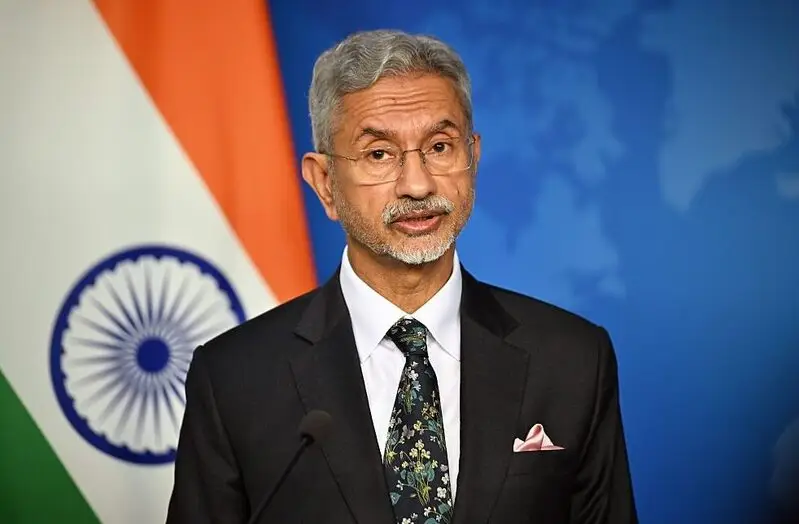
Not everyone inside the bloc pushes BRICS de-dollarization with the same urgency. Indian External Affairs Minister S. Jaishankar offered a notably cautious take:
“I do not believe we have any policy to have a replacement to the dollar. Global economic stability is pegged on the dollar as the reserve currency, and currently, the last thing we want in our world is less economic stability.”
That kind of internal disagreement is actually part of what makes BRICS expansion and trade coordination so hard to dismiss outright. The bloc does not need full consensus to move — it just needs enough momentum. South African Minister Ronald Lamola, pushing hard for deeper African representation within the BRICS Global South alliance, stated:
“We can only grow and expand as friends when we work together for the development of our mutual sister nations.”
Also Read: Russia Pursuing BRICS Bridge for an Alternative Financial Corridor
Flexibility Is the Actual Strength
Western analysts spent years measuring BRICS expansion against institutions like the EU and found it lacking. No institutional density, no shared governance model, no binding obligations. What they did not get is that such absences are characteristics and not gaps. Foreign interference in the domestic affairs of the member states has always been the order of things and therefore they constructed such that cannot be swayed by strict conditional terms. The BRICS growth and trade coordination continues to go in the right direction since no member is compelled to coordinate in all aspects. The bloc operates on whatever level of agreement is possible, and then proceeds.
BRICS Global north has taken a different turn in an unexpected direction. The very strategies that the Global South had come up with over decades and named non-alignment and multi-alignment are the same strategies proposed by Carney at Davos, issue-based coalitions, flexible alliances, and no rigid value alignment. The West is currently copying that playbook albeit without the attribution. BRICS expansion survived all the forecasts of premature deterioration, and at this moment it continues to increase. The Global South was ahead of this conversation by decades. Davos just needed a while to notice.