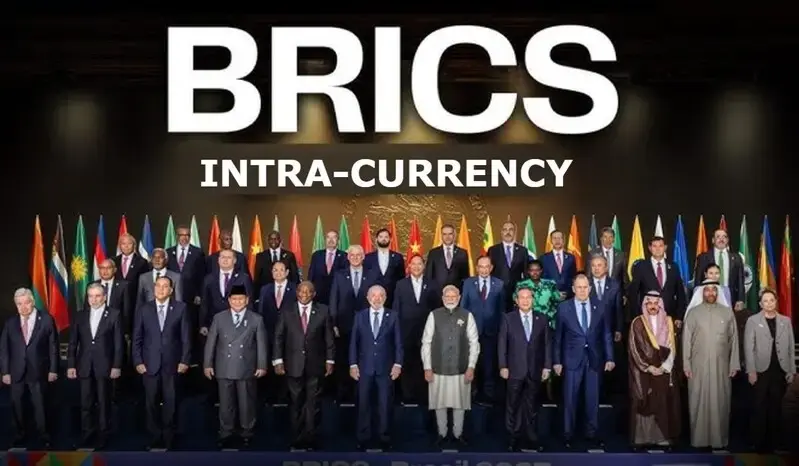

The BRICS alliance is assessing the prospects of conducting intra-currency payments to counter Western clout. The payment framework would link member currencies and safeguard their national economies by reducing the impact of US sanctions. The White House pressing sanctions are among the reasons for the bloc to consider sidelining the US dollar for trade.
Under the plan, the BRICS intra-currency system will have a payment channel where the feasibility depends on the settlement rate. Settling payments in the US dollar is the most expensive, with a higher markup in exchange fees. Using the local currencies of member nations will also make the West lose control over its financial mechanism.
Also Read: India BRICS Summit Wants to Connect Global MSMEs Under One Global Roof
“It is like a strategic tool to provide immunity against Western economic leverage. Even if there is dollar volatility, it will not affect payments as it will be near real-time payments,” said Geeta Kochhar, senior assistant professor at the Centre for Chinese Studies at Jawaharlal Nehru University in New Delhi. She added that the BRICS intra-currency financial system will be more resilient against external forces.
Such a scenario will strengthen the rupee, ruble, and yuan, as it could be the most commonly used tender, and their exchange of goods is higher. Kochhar added that the BRICS intra-currency system will act as an “insurance policy,” as critical goods will be available at a lower price due to savings in exchange fees. All the imports will “circumvent Western financial restrictions,” she added.
BRICS Intra-Currency System To Be Used For Oil Payments?

BRICS controls nearly 42% of the global oil industry, and using the intra-currency system could cause an upheaval. Kochhar said that “BRICS could shape intra-currency management due to their economic clout,” as 42% of oil comes from the alliance. In addition, the bloc also produces 40% of the global grains, making them to be agriculturally powerful.