

The Asian stock market has taken a violent toll amid the ongoing US-Iran crisis. The war narratives, which continue to evolve with each passing day, have led the Asian stock markets to witness the biggest investor exodus, with nearly $11B worth of outflows reported. The Asian markets around the world have reported a tumultuous change of pace and momentum, with Nikkei, Kospi, and Sensex taking the lead. Is a bigger sell-off on the cards in the future?
Also Read: US Oil Prices Crash $15 in 2 Hours as G7 Considers Reserve Release
Asian Markets in Panic Mode
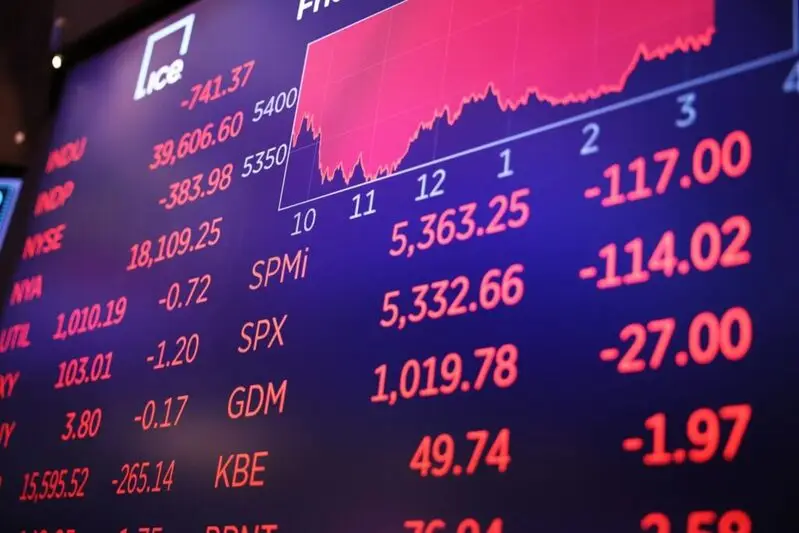
The global oil markets have been in a tizzy since the US-Iran war broke out. With the Asian markets dependent heavily on oil, the Asian stock markets have been witnessing the largest domain disruptions as of late. As 90% of the oil that passes through the Strait of Hormuz is destined for Asian buyers, the disruptions have led the investor sentiment to pivot and adopt a cautious stance, triggering panic mode throughout the sector.
“Asia is the most dependent region on oil and natural gas flows from the Middle East. 90% of all crude oil transiting the Strait of Hormuz is destined for Asia. And, ~82% of LNG exports from Qatar and the UAE flow to Asian buyers. China alone receives 38% of all oil flowing through the Strait of Hormuz, followed by India at 15%, South Korea at 12%, and Japan at 11%.“
The Dumping Frenzy Has Begun
Global investors have now started to aggressively dump Asian stocks, with stats reporting outflows worth $11B. Amid all this, Taiwan, South Korea, and India have been hit the hardest with nearly $7.9B, $1.6B, and $1.3B outflows, respectively.
“Investors are dumping Asian stocks at a rapid pace. Global investors sold -$11.0 billion of equities in developing Asia excluding China this week, the largest weekly outflow since March 2022. Outside of the 2022 bear market and the 2020 pandemic sell-off, this marks the largest weekly outflow on record. These outflows mark a sharp reversal after the region’s equities saw massive inflows in the first two months of 2026. As a result, the MSCI Asia Pacific Index dropped -6.3% last week, the biggest weekly loss in nearly 6 years. Asian stocks are losing momentum.”
A Boon in Disguise?
On the other hand, a new post by the Kobeissi Letter outlines a novel side of investors, the one that is also busy aggressively exploring such price dips. Per the latest KL post, retail investor appetite is also hitting new highs. The majority of the investors have been busy buying dips, with February proving to be the strongest month for individual investor equity purchases.
“Retail investor risk appetite is through the roof. February was the 5th-strongest month on record for individual investor equity purchases. Retail investors have now purchased stocks for 26 consecutive months. By comparison, the 2020-2022 period saw 29 straight months of buying. Furthermore, average daily retail options volumes in 2026 are now +14% above 2025 levels.”
Also Read: Gold Prices Drop 3% Despite Middle East War: Is a Bigger Crash Next?