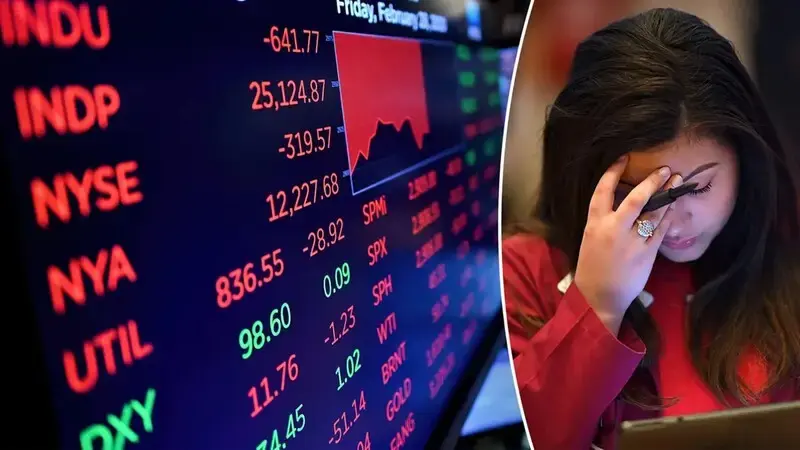

The widening conflict in the Middle East has deepened the stock rout in the Asian markets on Tuesday. Japan’s Nikkei fell the most with a decline of 1,778 points, losing more than 3% of its value. The opening bell saw the index at 57,700 and closed at 56,200. Leading equities bled profusely in the charts as they entered the bearish territory.
Hong Kong’s Hang Seng dipped by another 1.12% on Tuesday, shedding close to 300 points. The steep decline erased all the gains it generated in 2026. The index is now down nearly 2.2% year-to-date, leaving traders back to square one. The Asian stock market is the hardest hit due to the ongoing Israel-Iran-US conflict.
India’s Sensex and Nifty plunged on Monday, losing nearly 1,050 and 312 points, respectively. However, the Asian stock market index missed facing the axe on Tuesday as trading remained closed due to Holi, a national holiday. Traders are now bracing for impact on Wednesday as the sell-off could continue well into the week.
Also Read: 2 Oil Stocks To Benefit on Monday After Israel-Iran Conflict
The Impact on the Asian Stock Market Gets Harder
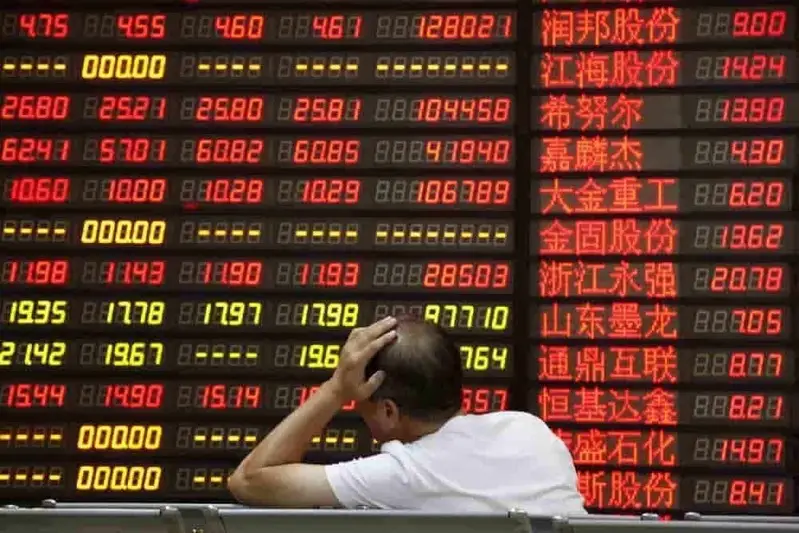
Asian traders had already anticipated a decline in the stock market after the war broke out. All analysis, price predictions, and estimates go for a toss when geopolitical turmoil engulfs the world. It puts a full stop to growth and takes the global economy two to three years behind. A quick recovery from here could be slow, as several countries are now involved in the conflict.
Traders who suffered losses due to the conflict will now have to wait for months to recover or break even. The situation is grim as the conflict is escalating with each passing day. The United Arab Emirates, Qatar, and Saudi Arabia are also at the receiving end of Iran. All of these are affecting the Asian stock market, deepening the rout in the day’s trading session.